EV vs. PHEV in Colorado Winters: Key Takeaways for Pikes Peak Drivers
Navigating sub-freezing mornings along the Front Range requires a vehicle tailored to severe thermal variations and steep elevation changes. Drivers across Colorado Springs, Security-Widefield, and Cimarron Hills often wonder whether a battery electric vehicle (BEV) or a plug-in hybrid electric vehicle (PHEV) provides the right combination of traction, range efficiency, and cold-weather dependability.
Direct Takeaway: Full electric vehicles deliver superior low-center-of-gravity snow traction and zero tailpipe emissions, but typically lose 20% of their total driving range in freezing temperatures due to cabin heating demands and lithium-ion battery chemistry dynamics. Plug-in Hybrids (PHEVs) offer 25 to 35 miles of pure electric range for local daily commuting around El Paso County while relying on an internal combustion engine to completely eliminate cold-weather range anxiety during winter mountain passes. Both powertrain configurations excel in severe winter weather when properly equipped with winter tires and battery preconditioning systems.
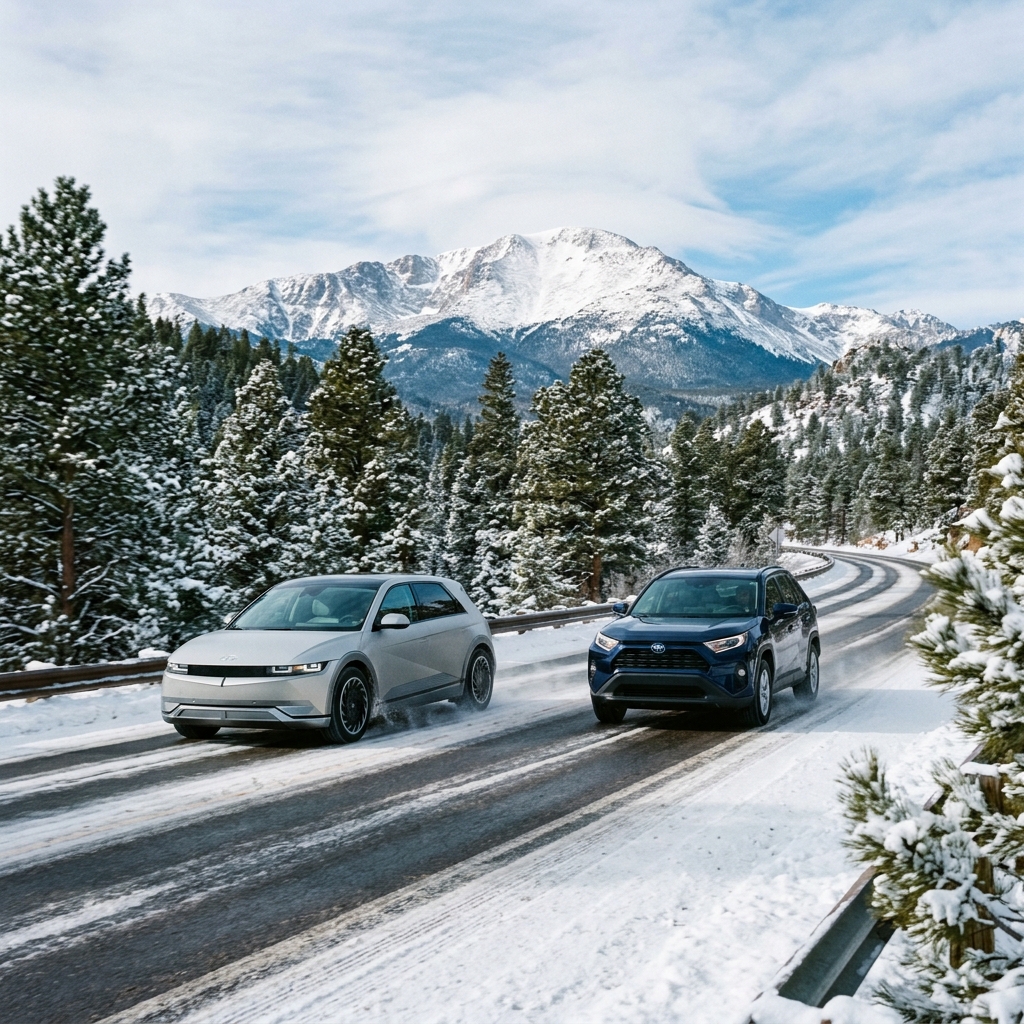
Whether you are commuting up I-25 toward Denver or taking Highway 24 into the Rockies, understanding how winter weather impacts battery management, cabin heat, and electric motor torque control allows you to make an informed choice. At Get Directions to #1 Phil Long Hyundai of Motor City, our dedicated electric vehicle team is here to help you evaluate real-world test drive performance under actual Colorado winter conditions. How Much Range Do Electric Vehicles Lose in Cold Winter Weather in Colorado?
When ambient temperatures drop below 32°F in Colorado Springs, chemical reactions inside lithium-ion battery cells slow down dramatically. The internal electrolyte liquid becomes more viscous, which increases internal electrical resistance and temporarily restricts available energy capacity. This physical reality affects all battery-powered vehicles, though modern thermal management design significantly cushions the impact.
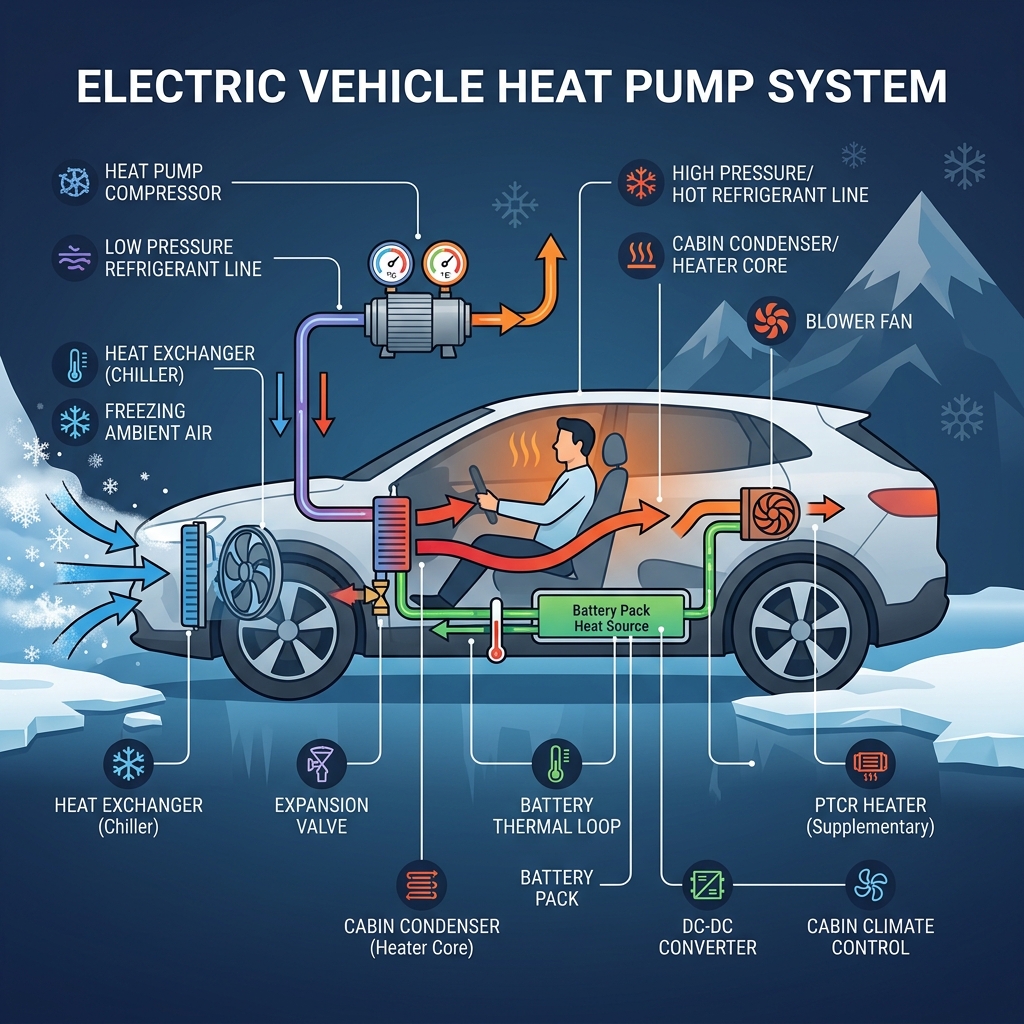
The largest factor in winter range reduction is not chemical resistance alone, but cabin climate conditioning. Gas-powered vehicles generate massive waste heat from their engines to warm the interior for free. Electric vehicles must produce heat directly from battery energy. Models equipped with resistive heaters experience range drops near 20%, while advanced vehicles featuring heat pumps (such as the Hyundai IONIQ 5 and IONIQ 6) experience much lower range losses—typically between 15% and 22%.
Plug-in Hybrids solve cabin heating differently. When ambient air is extremely cold, a PHEV can automatically start its internal combustion engine to warm the vehicle coolant circuit. This frees up the high-voltage hybrid battery to power the electric motor without depleting battery energy purely for passenger comfort.
Do Electric Vehicles Perform Better in Snow Than Gas Cars Due to Weight Distribution?
Yes, full electric vehicles frequently outperform traditional gas-powered cars on snow-covered roads due to low center of gravity and optimal weight distribution. In a purpose-built EV skateboard chassis, heavy battery packs sit directly beneath the floor pan between the axles. This low, centralized mass reduces body roll, increases tire ground contact pressure, and creates a near 50/50 front-to-rear balance.
In traditional gasoline cars, heavy front-mounted internal combustion engines create front weight bias, making rear-wheel traction light and inducing understeer or oversteer during emergency maneuvers on icy Colorado inclines like Rockrimmon or Woodmen Road.
Electric drive systems also deliver instant torque vectoring precision. Dual-motor HTRAC All-Wheel Drive systems in Hyundai electrified vehicles adjust rotational force to individual wheels in milliseconds—far faster than traditional mechanical transfer cases and driveshaft differentials.
When accelerating up steep, slick neighborhood roads in Cimarron Hills, electronic traction control continuously modulates power output without engine bogging or transmission gear hunting, maintaining momentum safely without wheel spin.
What Are Colorado Springs Utilities Residential Electricity Rates for Home EV Charging?
Off-Peak Savings: Colorado Springs Utilities (CSU) offers residential Time-of-Use (TOU) rates that make overnight home EV charging exceptionally affordable compared to gas pump costs. Charging during off-peak hours (overnight) allows drivers to lock in lower per-kWh energy prices.
Fuel Cost Breakdown: Driving an electric vehicle 1,000 miles per month in El Paso County typically costs roughly $35–$48 in residential electricity when charged off-peak, whereas a 25 MPG gasoline vehicle covering the same distance requires approximately $130–$150 in fuel.
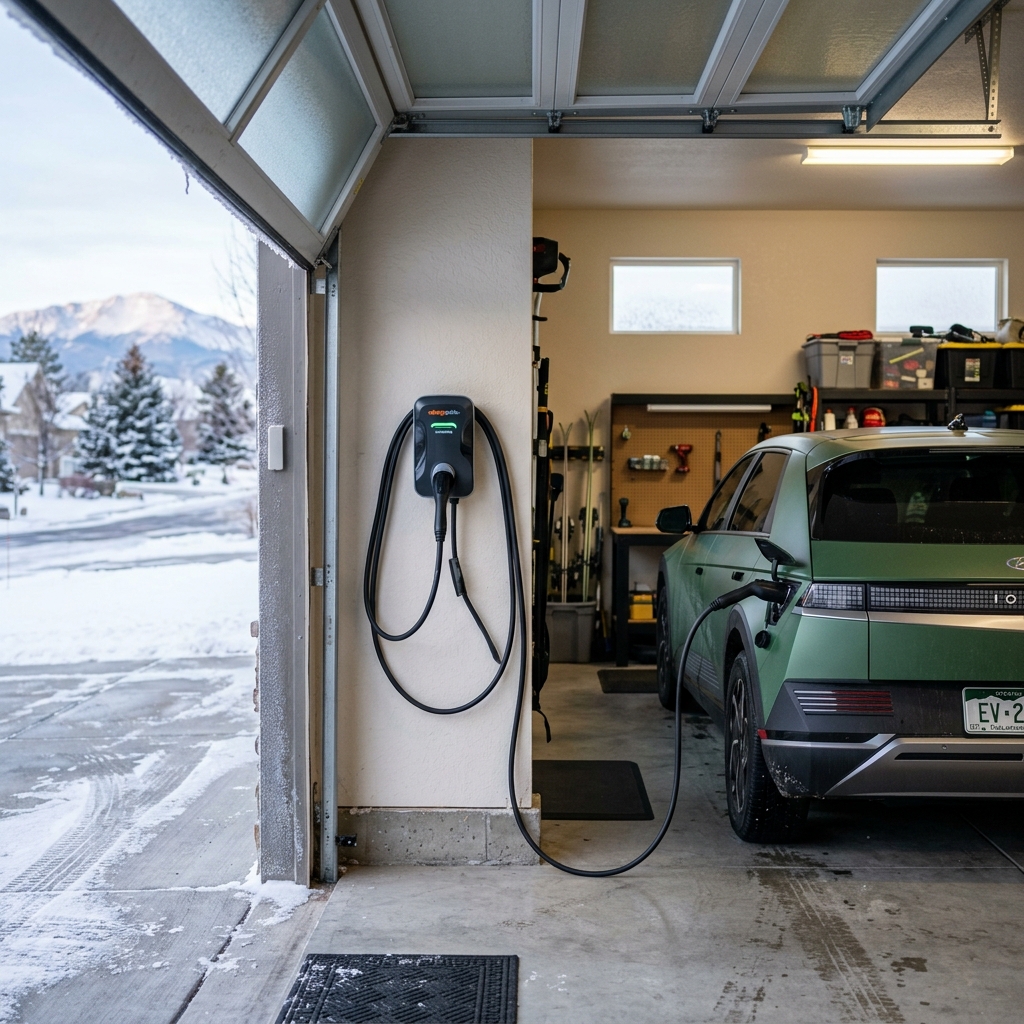
Grid Preconditioning: Charging at home on Level 2 (240V) allows you to precondition your cabin and warm the battery stack using grid energy before leaving your garage, ensuring full vehicle range when you pull onto the winter road.
Does an EV Make Sense in Colorado Springs Winter for Daily Driving & Mountain Passes?
Evaluating whether a full EV suits your lifestyle comes down to daily usage patterns and winter travel destinations. For local daily driving across Security-Widefield, Fountain, and central Colorado Springs, an EV with an official EPA range of 260 to 303 miles provides ample battery capacity. Even after accounting for a conservative 20% cold-weather reduction, you still retain 210 to 240 miles of practical range per charge—far exceeding typical daily commute distances of 30 to 50 miles.
For frequent high-altitude mountain travel—such as winter ski trips up Highway 24 over Wilkerson Pass or along I-70 to Monarch and Breckenridge—steep elevation gains and sub-zero temperatures consume additional energy. High-speed DC Fast Charging infrastructure along Colorado's major highway corridors continues to expand rapidly, but charging rates slow down when battery cells are cold. Drivers who travel deep into unpaved mountain passes during severe blizzards often find that a Plug-In Hybrid provides total confidence by blending electric efficiency with gasoline quick-refueling flexibility.
How Battery Preconditioning Saves Winter Range in Full Electric and Plug-In Hybrids
Battery preconditioning is the single most valuable habit for maximizing winter electric driving efficiency in Colorado. Through smartphone connectivity apps like Hyundai Bluelink, owners can program departure schedules. When set, the vehicle draws power from your wall charger to preheat the battery pack to its optimal operational temperature window (around 68°F to 75°F) while warming cabin air, seats, and steering wheel prior to your drive.
Starting your morning drive with a preconditioned battery delivers three distinct operational advantages: immediate maximum regenerative braking energy recovery, instant full cabin heat without battery range tax, and significantly faster DC fast-charging performance when navigating to regional high-speed charging stations.
What Colorado State Incentives May Reduce the Cost of Buying an EV in 2026?
Colorado State Tax Credit: Colorado continues to offer leading clean vehicle tax credits for eligible new full electric and plug-in hybrid vehicle purchases and leases, applied directly at purchase to lower your upfront investment from $750-$9,000.
Federal Clean Vehicle Savings: Qualifying models may also be eligible for federal clean vehicle tax savings, providing point-of-sale cap cost reductions on modern electrified vehicle leases and purchases.
Utility Rebates & TCO: Combining state credits with regional electric utility charger rebates and zero oil-change service schedules drastically decreases your total vehicle ownership costs over a 5-year ownership period.
Our finance specialists at #1 Phil Long Hyundai of Motor City can explain current incentive qualifications and help you structure a lease or finance program tailored to your financial goals. Explore our New Car Inventory Search to review current electrified models in stock today. Winter Tires, Brake Care, and Maintenance for EVs and PHEVs in the Pikes Peak Region
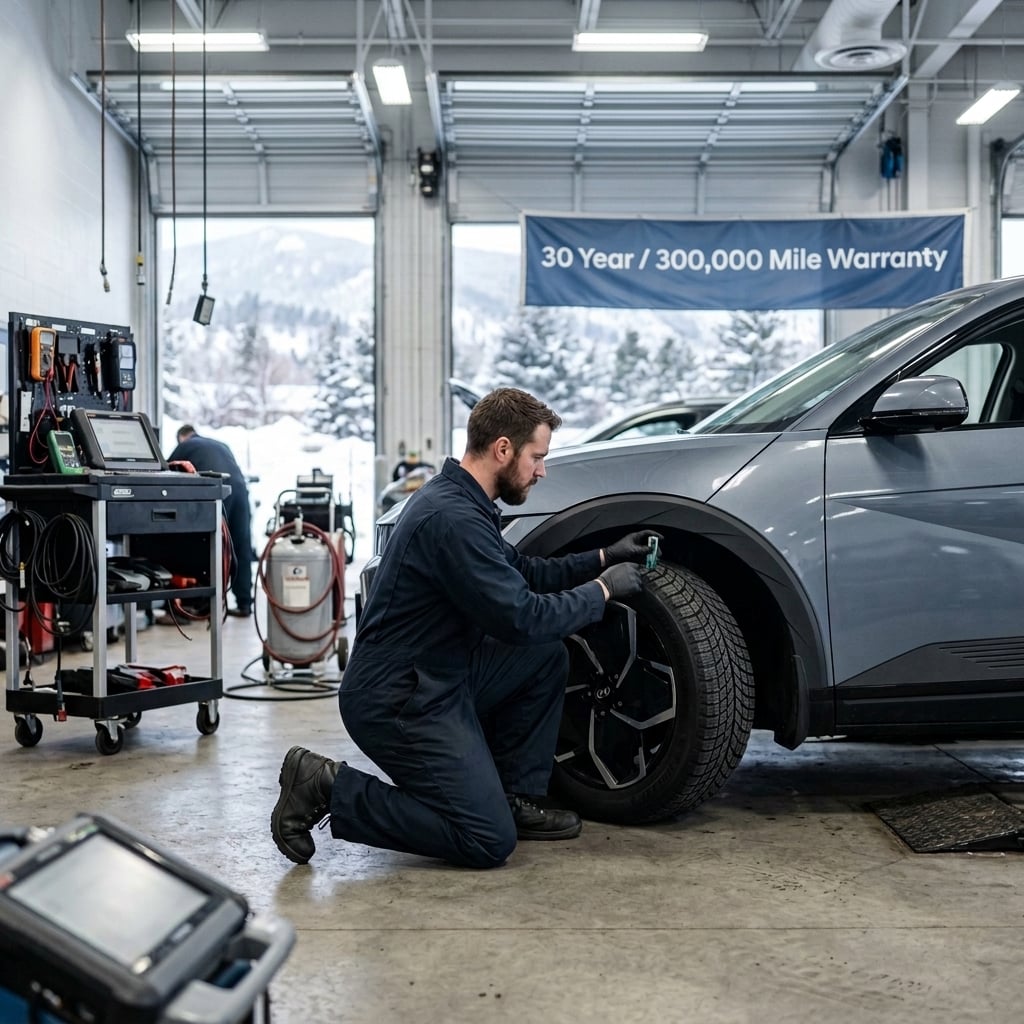
Proper tire selection is critical for maximizing cold-weather safety in heavier electric and plug-in hybrid vehicles. Because electric vehicles deliver instant low-end torque and carry additional weight from battery packs, standard all-season tires harden in temperatures below 45°F, reducing traction. Equipping specialized winter-rated tires with soft silica tread compounds ensures optimal grip during braking and cornering on packed snow and black ice.
Another crucial winter maintenance factor is brake system maintenance. Because regenerative braking performs most vehicle slowing, hydraulic mechanical brake pads and steel rotors are used less frequently, making them susceptible to road salt oxidation and surface rust in Colorado winters. Periodic brake maintenance cleans and lubricates caliper pins to maintain peak braking performance.
Drivers should also adjust regenerative braking sensitivity when traversing icy downhill grades. Setting regenerative braking to level 1 or auto prevents aggressive rear drag wheel slippage on sheer ice, ensuring smooth, controlled stopping.
EV vs. PHEV Winter Comparison: Battery Range, Heating Efficiency, and Cold Reliability
Winter Criteria | Full Electric Vehicle (BEV) | Plug-In Hybrid Vehicle (PHEV) |
|---|
Cold Range Loss (below 32°F) | 15% to % overall reduction | 15% to 25% electric range drop (Gas engine supplements) |
Cabin Warming Speed | Instant (Heat pump / Electric resistance) | Fast (Engine coolant heat + electric heating) |
Traction & Snow Handling | Exceptional (Low center of gravity, 50/50 balance) | Excellent (Engine front mass + HTRAC AWD) |
Long Mountain Trip Flexibility | Requires DC Fast Charging stops | Seamless (Gasoline backup, zero delay) |
Home Charging Setup | Level 2 (240V) strongly recommended | Level 1 (120V) or Level 2 (240V) |
Battery Performance: BEVs demand proactive battery thermal conditioning prior to fast charging, whereas PHEVs maintain auxiliary gas flexibility regardless of ambient temp drops.
Heating Comfort: Full EVs feature instantaneous cabin warmth through electronic climate units, eliminating the need to wait for internal combustion engine blocks to warm up.
Cold Reliability: Modern thermal management systems protect battery longevity across both powertrains, ensuring consistent starting power in sub-zero Front Range temperatures.
Which Winter Vehicle Fits Your Lifestyle in Security-Widefield or Cimarron Hills?
The Suburban Commuter (Full EV Candidate): If you live in Security-Widefield, Cimarron Hills, or Briargate and have access to a garage or dedicated off-street parking where a Level 2 charger can be installed, a full electric vehicle like the Hyundai IONIQ 5 or IONIQ 6 offers maximum benefit. Daily commutes of 20 to 60 miles are effortlessly handled in pure electric mode, letting you wake up every single morning with a fully charged, preheated vehicle.
You will eliminate gas station visits completely during cold winter months, save hundreds of dollars on routine winter fuel costs, and enjoy ultra-quiet, immediate cabin comfort during icy morning stop-and-go traffic on Powers Boulevard or I-25.
The Outdoor Explorer (PHEV Candidate): If you routinely drive into remote mountain areas for backcountry skiing, snowmobiling, or camping where high-speed charging infrastructure is sparse, a Plug-In Hybrid like the Tucson PHEV or Santa Fe Hybrid delivers optimal flexibility. You get 30+ miles of pure zero-emission electric commuting around town, backed by a high-efficiency gasoline engine for 400+ miles of total highway freedom.
How to Transition Your Gas Vehicle to an EV or PHEV Before Next Winter
Transitioning from a traditional internal combustion vehicle to an electrified powertrain is simpler than ever. Step one is determining your current vehicle's real-market equity. High regional demand for reliable pre-owned vehicles in El Paso County means your current gas vehicle may be worth significantly more toward a trade-in purchase than you think.
Step two is calculating your estimated monthly fuel and maintenance savings. Replacing $200 per month in gasoline with $40 in residential electric charging, combined with eliminating routine engine oil changes and spark plug services, offsets a significant portion of a new vehicle payment.
Test Drive Electric and Plug-In Hybrid Vehicles at Phil Long Hyundai of Motor City
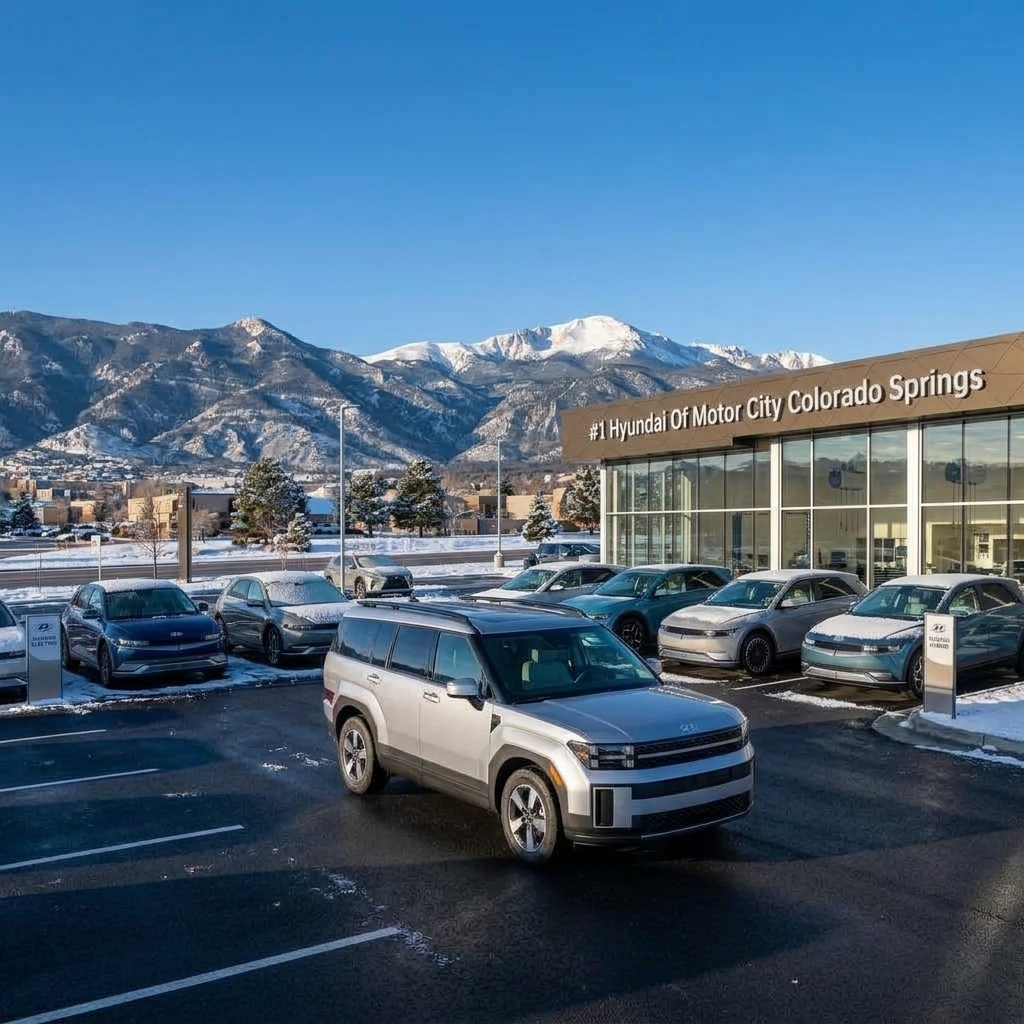
Experience how advanced electrified powertrains conquer winter weather conditions firsthand. Visit #1 Phil Long Hyundai of Motor City at 170 W Motor Way, Colorado Springs, CO 80905 to test drive the ultra-fast-charging IONIQ 5, sleek IONIQ 6, or versatile Tucson Plug-In Hybrid.
Our dealership proudly backs qualifying vehicle purchases with the #1 Hyundai Motor City Warranty Promise—protecting original owners for up to 30 years or 300,000 miles. Call us at (719) 453-0549 or visit our showroom to speak with our certified EV specialists today.