Why a New Hyundai SUV Delivers a Lower 5-Year Ownership Cost Than a Subaru Crosstrek in Colorado Springs
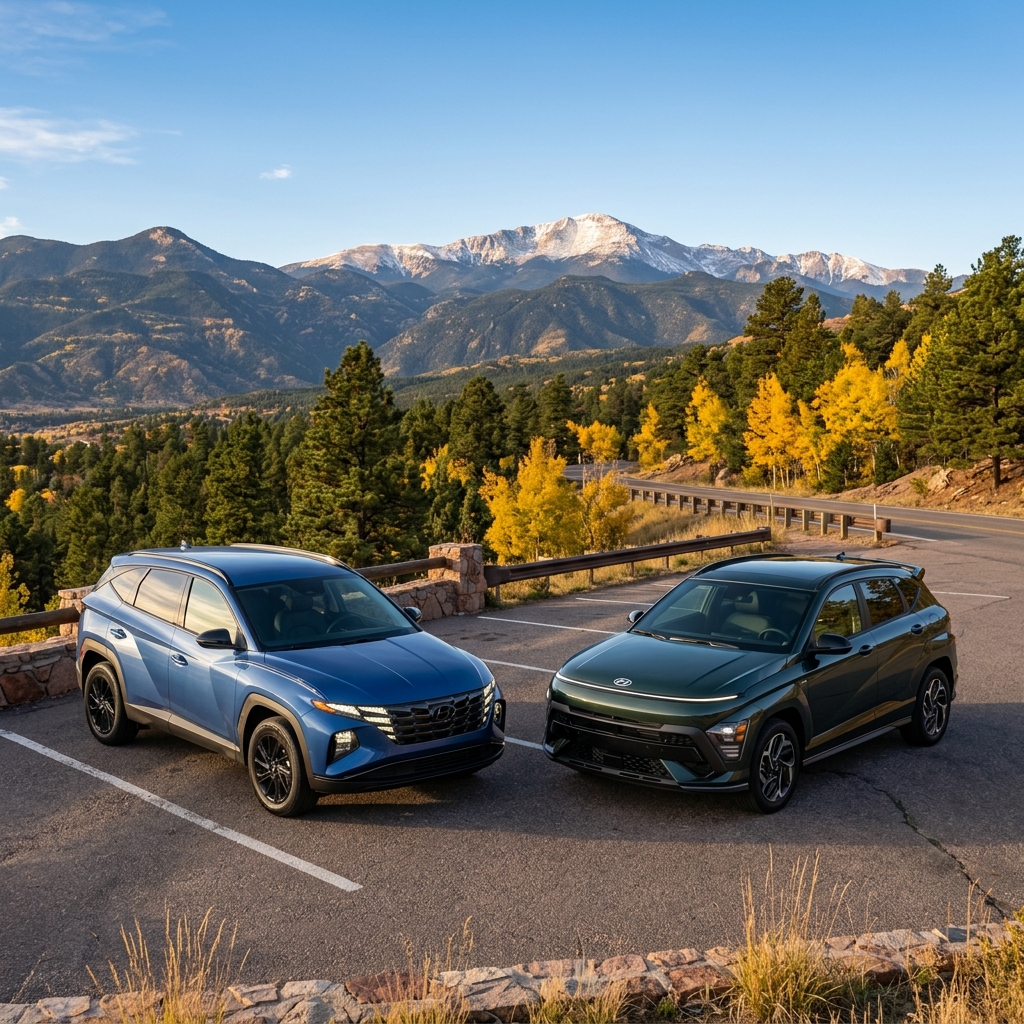
When purchasing a compact crossover in the Pikes Peak region, many drivers naturally weigh the popular Subaru Crosstrek against versatile Hyundai SUV contenders like the Kona and Tucson. While Subaru has built a reputation around standard all-wheel drive, a rigorous financial evaluation reveals a clear victor in total financial commitment. Over a standard five-year ownership cycle, a new Hyundai SUV consistently delivers a $2,500 to $4,200 total cost of ownership COST-SAVINGS ADVANTAGE over an equivalent Subaru Crosstrek for Colorado Springs residents. And don’t forget one of the standout value’s provided EXCLUSIVELY by #1 Hyundai Motor City – a no-charge 30 Year / 300,000 Mile Warranty comes with every new Hyundai, which delivers an ULTRA VALUE for drivers wanting long term ownership.
This bottom-line savings is driven by four key financial pillars: lower entry purchase prices (MSRP), three full years of factory-funded complimentary routine maintenance, superior hybrid fuel economy options, and America's Best 10-Year/100,000-Mile Powertrain Warranty + the standout value provided EXCLUSIVELY by #1 Hyundai Motor City – a no-charge 30 Year / 300,000 Mile Warranty comes with every new Hyundai.. Whether commuting along I-25 from Fountain or tackling elevated grades near Woodland Park, Hyundai owners shield themselves against unpredictable out-of-pocket repair costs and escalating maintenance bills. Explore our New Car Inventory Search to compare model trims and pricing in real time.
What Factors Contribute to Total Cost of Ownership for a Compact SUV?
Smart car buyers recognize that a vehicle's sticker price is merely the starting point of its overall financial impact. Total Cost of Ownership (TCO) aggregates every dollar required to drive, insure, fuel, maintain, and protect your crossover over years of daily use. Looking beyond baseline financing reveals six major financial vectors: initial purchase price, interest rates, scheduled factory maintenance, expected fuel usage, regional insurance premiums, and unexpected component repairs.
In Colorado Springs, atmospheric elevation and sharp temperature swings place extra demands on engines, cooling loops, transmission fluids, and all-wheel-drive systems. High altitude reduces engine efficiency in non-turbocharged powertrains, causing higher annual fuel expenses. Meanwhile, winter freeze-thaw cycles accelerate wear on brake assemblies and suspension linkages. Evaluating standard warranties and scheduled maintenance protection is essential before finalizing a purchase.
The Six Pillars of SUV Total Cost of Ownership:
1. Depreciation: The drop in vehicle asset market value over 60 months.
2. Financing & Interest: Monthly loan principal and interest charges.
3. Scheduled Maintenance: Routine oil filters, cabin air filters, tire rotations, and inspections.
4. Fuel Expenses: Annual gas expenditures adjusted for local driving terrain.
5. Insurance Rates: Comprehensive protection fees based on safety technology ratings.
6. Out-of-Pocket Repairs: Mechanical fix costs after factory limited warranties expire.
Starting MSRP Breakdown: Hyundai Kona vs. Subaru Crosstrek Trim Pricing
Comparing trim levels highlights significant value advantages for Hyundai buyers. Standard equipped Hyundai Kona models offer larger infotainment screens, wireless integration, and advanced driver convenience equipment that often requires adding expensive options packages on competing Subaru trims.
Base Trim Comparison
Hyundai Kona SE starts lower than the baseline Crosstrek. Includes a standard 12.3-inch touchscreen display, wireless Apple CarPlay®, Android Auto™, and active lane-centering systems right out of the factory gate.
Mid-Tier Value
Hyundai Kona SEL adds 18-inch alloy wheels, heated front seats, roof side rails, and push-button start while staying significantly below the MSRP of a Subaru Crosstrek Premium equipped with similar packages.
Premium & Turbo Trims
Hyundai Kona N Line / Limited features a responsive 1.6L turbocharged engine with an 8-speed automatic, surrounding drivers in premium H-Tex leatherette seating, Bose premium audio, and Surround View Monitors.
|
Feature / Specification
|
Hyundai Kona (Standard/SEL)
|
Subaru Crosstrek (Base/Premium)
|
|
Baseline Entry MSRP
|
Lower Starting MSRP
|
Higher Starting MSRP
|
|
Standard Infotainment Touchscreen
|
12.3-inch High-Res Display
|
7.0-inch Dual Screen (Base)
|
|
|
|
|
|
Powertrain Warranty Protection
|
30 Years / 300,000 Miles, a #1 Hyundai Motor City’s EXCLUSIVE
|
5 Years / 60,000 Miles
|
|
Bumper-to-Bumper Warranty
|
5 Years / 60,000 Miles
|
3 Years / 36,000 Miles
|
What Does the #1 Hyundai Motor City 30-Year/300,000-Mile Powertrain Warranty Cover?
The cornerstone of Hyundai's long-term value strategy is America's Best Warranty. Every new Hyundai SUV comes backed by a 10-Year/100,000-Mile Powertrain Limited Warranty alongside a 5-Year/60,000-Mile New Vehicle Limited Warranty. Plus #1 Hyundai Motor City’s EXCLUSIVE 30 Year / 300,000 Mile Powertrain Warranty! By contrast, Subaru provides standard coverage for only 5 years or 60,000 miles for powertrain components and just 3 years or 36,000 miles for bumper-to-bumper protection.
For Pikes Peak region drivers who accumulate 12,000 to 15,000 miles per year commuting along the I-25 corridor between Monument and Security-Widefield, Subaru's powertrain coverage runs out during year four or five. Major mechanical components—such as transmission assemblies, engine block internals, cylinder heads, water pumps, drive shafts, and differential gears—become the financial responsibility of the owner under Subaru's standard plan. Detailed warranty terms can be reviewed via our Service Center Information resources.
Scheduled Pre-Paid Maintenance Costs: Hyundai has Maintenance plans starting at $349.95 vs. Out-of-Pocket Subaru Service
Routine scheduled service keeps your SUV performing optimally, but these regular visits add up quickly. Hyundai includes available Hyundai Pre-Paid Maintenance for 3 years or 36,000 miles(whichever comes first) starting at only $349.95. This covers factory-scheduled oil changes, oil filter replacements, tire rotations, and multi-point safety inspections perform by factory-certified technicians.
Subaru does not offer standard nationwide complimentary maintenance on new vehicle purchases. Crosstrek owners pay out-of-pocket for every oil change, tire rotation, and fluid service from day one. Over 36,000 miles of driving in El Paso County, out-of-pocket maintenance for a Crosstrek typically costs between $600 and $900. You can easily book your routine service through our online portal: Schedule Service Appointment Now.
|
Service Interval (3 Years / 36,000 Miles)
|
Hyundai $349.95 Plan
|
Subaru Crosstrek Driver Cost
|
|
Engine Oil & Filter Changes (Up to 5 Services)
|
$0 (Covered by Factory)
|
$350 - $480 Out-of-Pocket
|
|
Tire Rotations (Up to 3 Services)
|
$0 (Covered by Factory)
|
$150 - $220 Out-of-Pocket
|
|
Multi-Point Safety & Fluid Inspections
|
$0 (Covered by Factory)
|
$100 - $200 Out-of-Pocket
|
|
Total 36-Month Maintenance Expenditure
|
$349.95
|
$600 - $900 Estimated
|
How Could a 2027 Hyundai Tucson Hybrid's Fuel Economy Affect Ownership Costs vs. Crosstrek?
Fuel expenses represent one of the most variable ongoing costs of owning a vehicle. Drivers evaluating midsize and compact crossovers can upgrade to the 2027 Hyundai Tucson Hybrid, which delivers an EPA-estimated combined fuel economy rating well above standard non-hybrid competitors like the Subaru Crosstrek.
Navigating daily stop-and-go traffic along Powers Boulevard or tackling steep mountain climbs up Ute Pass places a heavy workload on standard gasoline engines. The Tucson Hybrid uses an electric motor to assist low-speed acceleration, reducing engine strain and gasoline consumption. Driving 15,000 miles per year at local gas prices, a Tucson Hybrid owner can pocket $400 to $650 in annual fuel savings compared to a non-hybrid Crosstrek, yielding up to $3,250 in net fuel savings over five years.
How Does Hyundai HTRAC All-Wheel Drive Work in Snow Across Security-Widefield and Cimarron Hills?
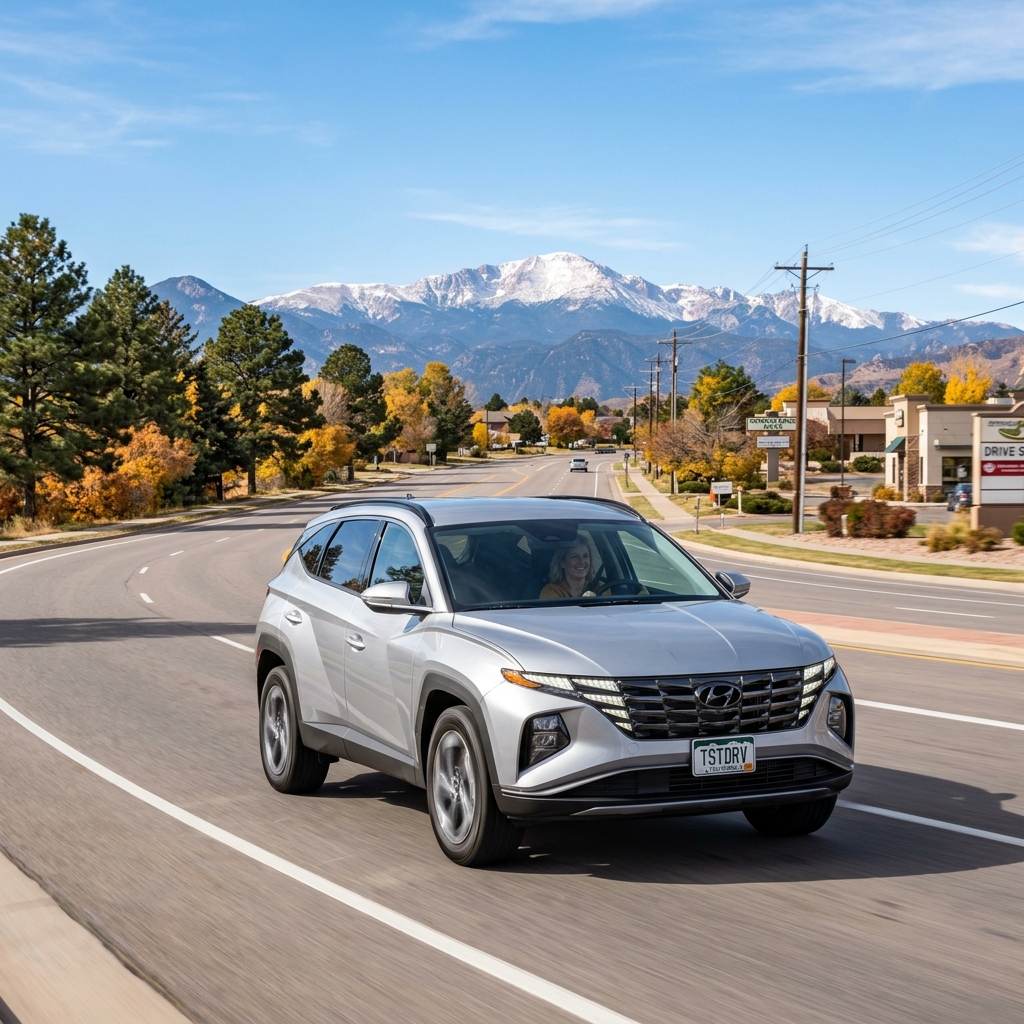
Colorado weather demands dependable traction in snow, slush, and black ice. While Subaru emphasizes its Symmetrical AWD system, Hyundai’s advanced electronic HTRAC All-Wheel Drive system offers multi-mode torque vectoring designed specifically for winter conditions in the Pikes Peak region.
Active Torque Splitting
HTRAC constantly monitors vehicle speed, wheel slip sensors, and steering inputs 100 times per second. It electronically redistributes engine torque between front and rear axles to prevent loss of control before wheel slip occurs.
Dedicated Snow Mode
Selecting Snow Mode optimizes gear shift points, moderates throttle responsiveness, and adjusts torque splitting to maintain confident traction on unplowed suburban streets in Cimarron Hills or slushy highway ramps.
Fuel-Saving Disconnect
On clear dry roads, HTRAC disengages rear-wheel drive components to reduce mechanical drag, boosting fuel economy compared to full-time mechanical AWD systems that continuously drag on gas efficiency.
How Does Subaru EyeSight Compare to Hyundai SmartSense Driver Assistance?
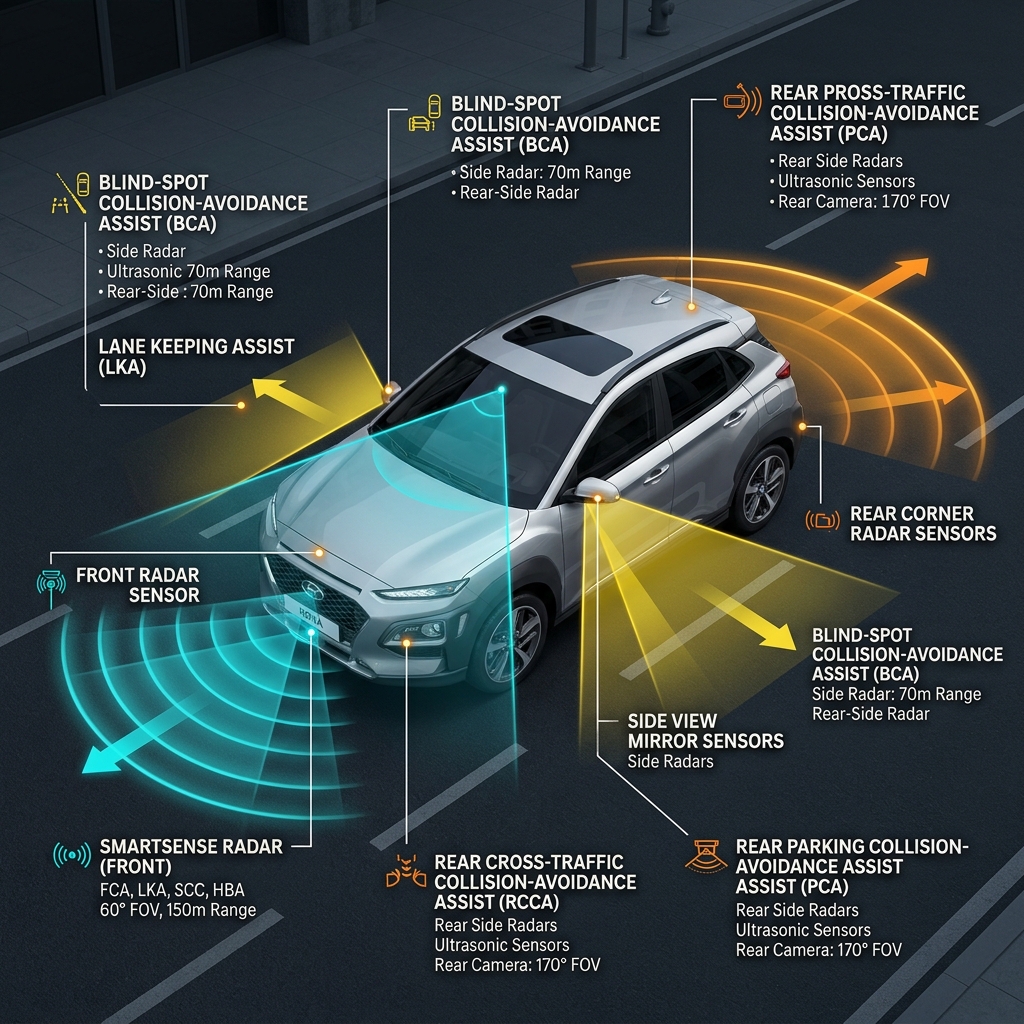
Safety features protect lives while helping minimize vehicle damage and insurance premiums. Both Hyundai and Subaru equip their crossovers with active safety suites—Hyundai SmartSense and Subaru EyeSight. However, Hyundai makes several key safety technologies standard across base and lower trim tiers that Subaru reserves for higher trim upgrades.
Hyundai SmartSense features standard Blind-Spot Collision-Avoidance Assist, Rear Cross-Traffic Collision-Avoidance Assist, Safe Exit Warning, and Highway Driving Assist (HDA). Insurance providers frequently reward these proactive radar-and-camera collision avoidance systems with discounts on comprehensive and collision coverage, further lowering standard ownership expenses.
5-Year Depreciation Projections and Long-Term Resale Value Comparison
Depreciation is often the single largest expense in owning any vehicle during its first five years. Historically, Subaru held high residual value retention due to regional demand in mountainous states. However, industry trade-in evaluations show that Hyundai’s elevated build quality, updated design language, and 10-year warranty backstop have dramatically narrowed this gap.
Because a original Hyundai buyer pays less initial MSRP for a better-equipped vehicle and avoids roughly $800 in early routine service fees, the net residual balance at month 60 heavily favors the Hyundai owner. When you decide to trade in your SUV, retained equity combined with low 5-year operational costs yields a superior return on investment. You can calculate your current vehicle trade-in equity today using our online tool: Value Your Trade OR Sell Us Your Car. Browse our inventory of secondary market options anytime by visiting our Search Pre-Owned Inventory page.
What Local Hyundai Price and Warranty Details Should Colorado Springs Shoppers Verify?
Key regional savings factors to confirm include:
• Military Purchase Incentives: Active duty and retired military personnel stationed at Fort Carson, Peterson SFB, or Schriever SFB may qualify for specialized promotional pricing.
• Low APR Promotional Rates: Compare factory finance programs to lock in competitive interest rates through our online finance center.
• Exclusive Dealership Warranties: Ask about our dealership powertrain protection promises that extend long-term peace of mind.
Calculating Your Real 5-Year Ownership Budget: A Step-by-Step Checklist
Follow this practical step-by-step checklist to evaluate your real out-of-pocket ownership costs before choosing your next vehicle:
Step 1: Out-of-Pocket Purchase
Calculate your net purchase price after deducting vehicle trade-in equity, regional buyer incentives, and down payment savings. You can Apply For Financing online to lock in interest rates.
Step 2: Operating Costs
Estimate 5-year fuel expenditures based on annual driving mileage. Factor in $0 routine service costs with Hyundai Complimentary Maintenance versus out-of-pocket Subaru garage visits.
Step 3: Protection Shield
Compare repair risk beyond year 3 and 36,000 miles. Hyundai's 10-year powertrain warranty guards against unexpected mechanical repair bills through your entire ownership cycle.
Test Drive a New Hyundai SUV at Phil Long Hyundai of Motor City Today
When you tally initial MSRP pricing, 3 years of complimentary factory maintenance, superior hybrid fuel economy options, and standard 10-year warranty coverage, choosing a new Hyundai Kona or Tucson over a Subaru Crosstrek is a clear financial win for Colorado drivers.
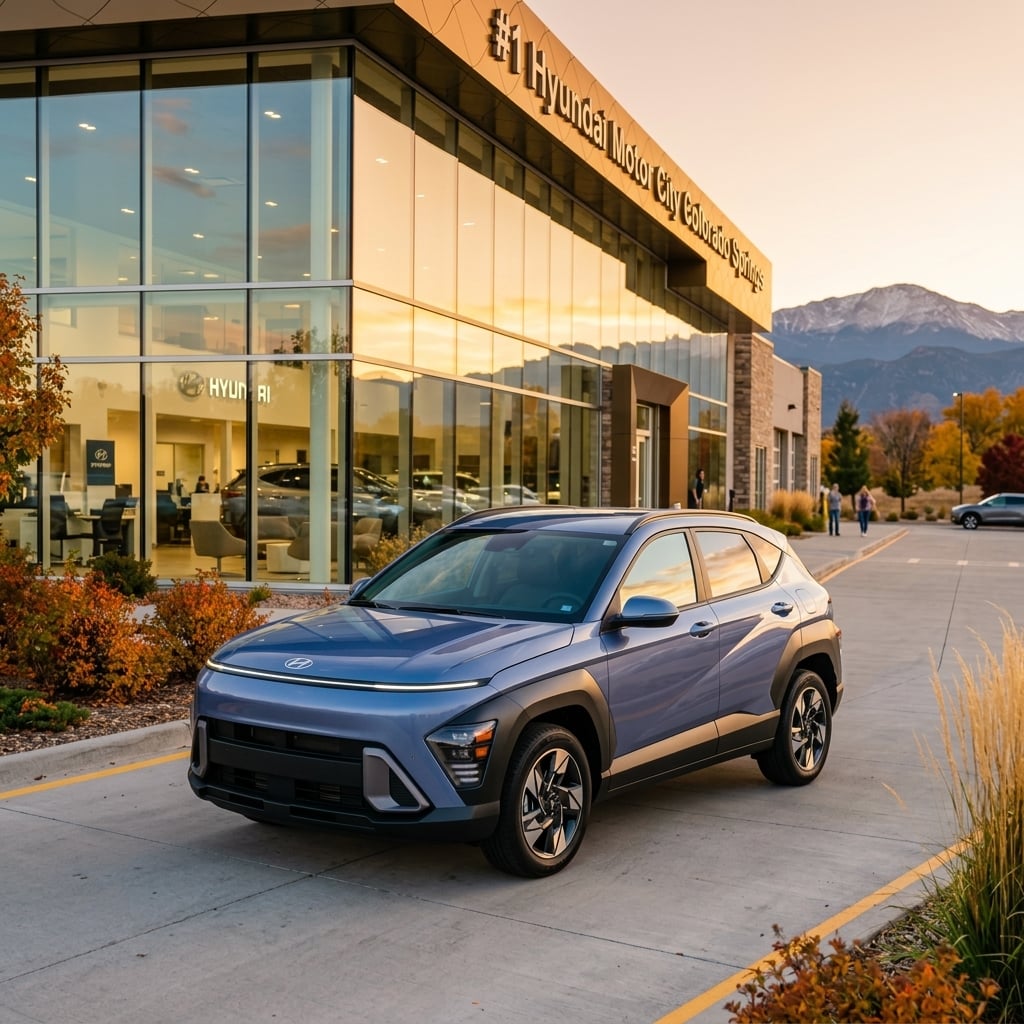
Visit our modern Motor City dealership to compare trims, take a test drive, and experience Hyundai quality firsthand. Call us at (719) 453-0549 to schedule an appointment with our friendly vehicle specialists located at 170 W Motor Way, Colorado Springs, CO 80905.