
Do You Really Need AWD for Colorado Springs Winters?
While all-wheel drive is not strictly mandatory for every driver, having AWD in Colorado Springs provides significant practical advantages for navigating sudden snowstorms, unplowed residential hills, and rapid elevation shifts. Because local snow-clearing prioritizes major thoroughfares first, four driven wheels deliver essential acceleration traction when pulling out of snowy neighborhood streets or ascending slick inclines. However, AWD primarily improves forward momentum rather than stopping ability.
Sitting at roughly 6,000 feet elevation at the eastern foot of the Rocky Mountains, the region experiences winter temperatures dropping near 17 degrees Fahrenheit and average seasonal snowfall around 33 to 34 inches, with multi-decade climate records recording up to 50 to 53 inches. Rapid weather shifts often leave side streets packed with ice and slush long before plows arrive.
When navigating neighborhood roads near our showroom off Interstate 25, having power distributed across both axles prevents wheel spin when starting from a full stop at icy intersections. While front-wheel drive can manage mild winter driving on flat, clear roads, all-wheel drive provides reassuring stability for daily commutes and spontaneous trips into the foothills.
If you want to discuss winter capability options in person or test drive a model equipped with advanced traction technology, stop by for directions to our Motor City location or give our team a quick call at (719) 453-0549.
Table of Contents
- Can Drivers Get By with Front-Wheel Drive and Winter Tires?
- Does All-Wheel Drive Offer a Real Safety Advantage Over Winter Tires?
- Is All-Wheel Drive Legally Mandated by Colorado Winter Traction Laws?
- How Do Hyundai HTRAC All-Wheel Drive Systems Handle Local Winter Driving?
- Common Questions About All-Wheel Drive and Colorado Winters
- Prepare Your Vehicle for Winter Driving
Can Drivers Get By with Front-Wheel Drive and Winter Tires?
Drivers can safely navigate typical winter roads using a front-wheel-drive vehicle equipped with high-quality winter tires, provided they stay on well-maintained arterial routes and avoid severe inclines during major storms. Dedicated winter tires feature specialized cold-weather rubber compounds and aggressive tread patterns that deliver essential braking and cornering grip that no drivetrain alone can supply.
In front-wheel-drive vehicles, the weight of the engine and transmission sits directly over the driven front wheels, providing reasonable initial traction on slick pavement. When paired with winter tires rated with the Three-Peak Mountain Snowflake symbol, a front-wheel-drive sedan or crossover can accelerate efficiently on moderate slush and stop notably shorter than an all-wheel-drive vehicle riding on worn all-season tires.
For commuters driving through suburban communities like Security-widefield, where morning neighborhood streets may remain unplowed after overnight snowfall, winter tires turn two-wheel drive into a dependable option. The primary limitation arises on steep hills or when attempting to pull away from a complete stop on an icy grade, where a two-wheel-drive setup may experience wheel spin under acceleration.
If you prefer two-wheel-drive efficiency or want to explore value-focused pre-owned options, you can explore our pre-owned inventory to find reliable winter transportation. To keep your current vehicle operating safely through freezing temperatures, be sure to schedule a winter service appointment for a comprehensive tire and brake inspection.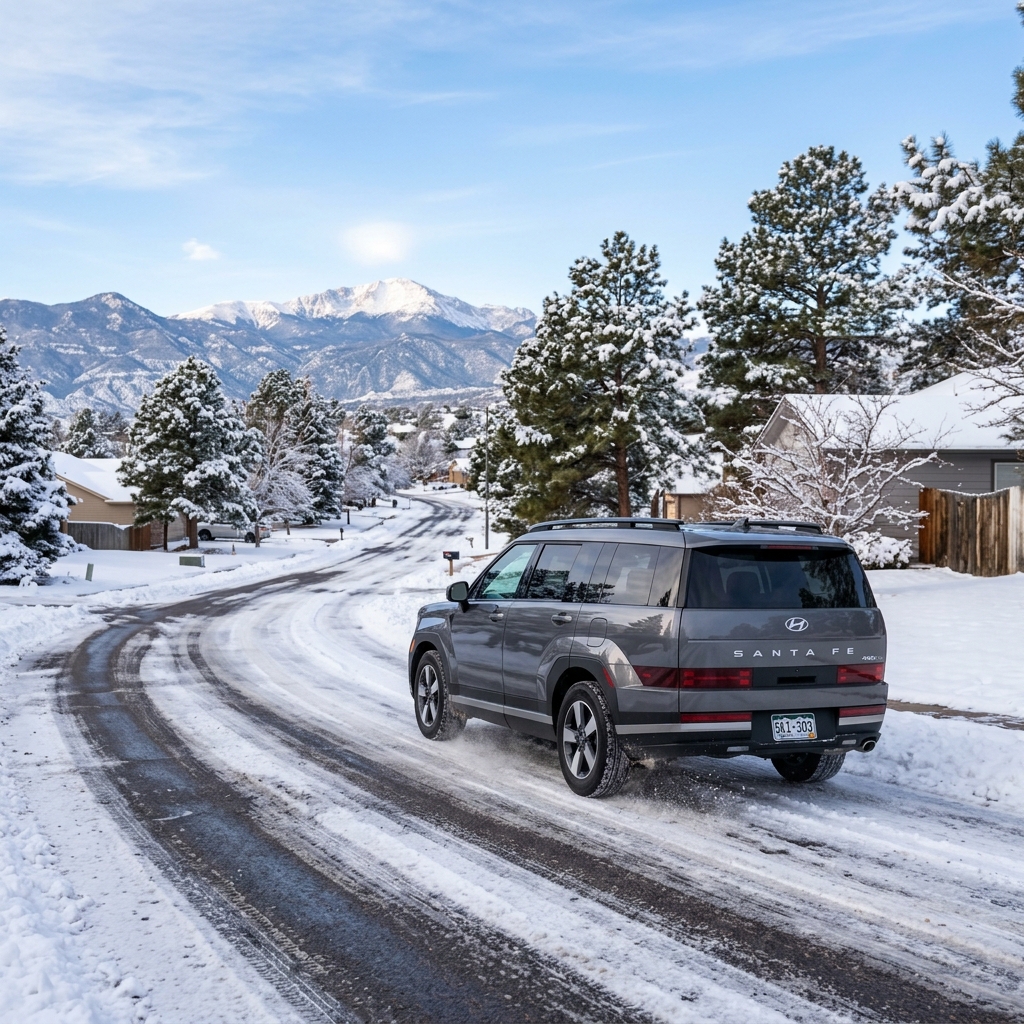
Does All-Wheel Drive Offer a Real Safety Advantage Over Winter Tires?
All-wheel drive offers a distinct safety advantage for acceleration and vehicle stability on slippery roads, but it does not shorten braking distances or increase lateral cornering grip compared to dedicated winter tires. The greatest safety benefit occurs when all-wheel drive is combined with proper cold-weather tires, giving drivers optimal control during both acceleration and braking.
A common misconception among winter drivers is assuming that all-wheel drive creates extra road friction when applying the brakes. Braking relies entirely on the friction between the tire tread and the road surface, meaning an all-wheel-drive crossover on all-season tires can take nearly twice as far to come to a complete stop on snow compared to a two-wheel-drive vehicle on dedicated winter tires.
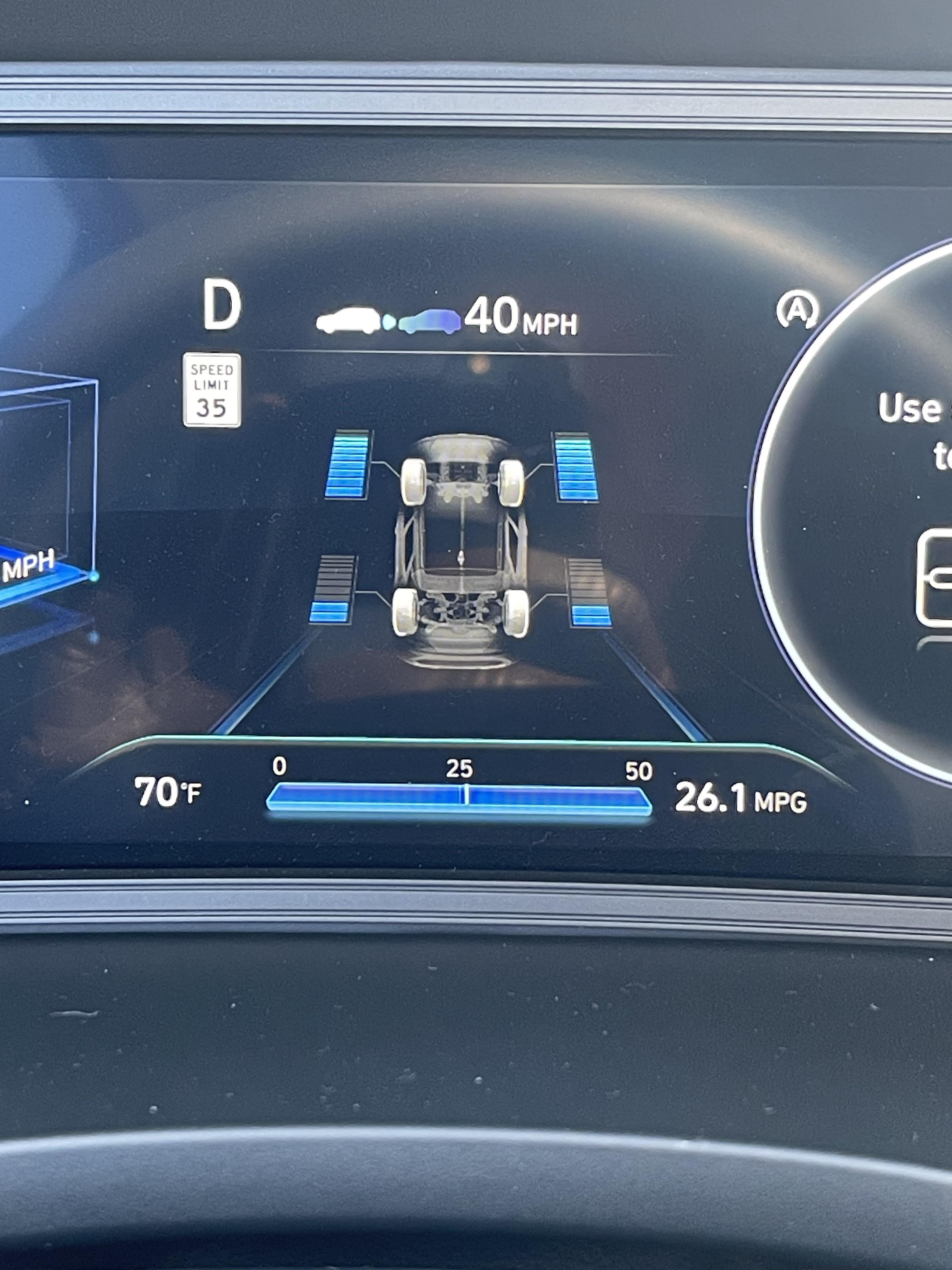
However, modern electronic all-wheel-drive systems continuously monitor individual wheel speed and throttle input to stabilize the vehicle during acceleration and active lane changes. By distributing engine torque dynamically between the front and rear axles, all-wheel drive prevents snap wheel slip when accelerating out of turn-outs or onto icy highway merging lanes.
When local shoppers compare winter vehicle options on our showroom floor, they often ask whether trading in an older two-wheel-drive car for an all-wheel-drive crossover is worth the transition. If you are considering upgrading your daily driver for enhanced winter confidence, you can value your trade-in online to see how your current vehicle offsets the purchase.
For example, the 2026 Hyundai Tucson SEL AWD features a base MSRP of $32,550 with a $1,650 destination charge, offering integrated all-weather control without sacrificing everyday practicality.
Pricing
Pricing by trim
| Feature | Blue SE HEV AWD | Blue SE HEV AWD (Before May 2026) | Limited AWD | Limited AWD (Before April 2026) | Limited FWD | Limited FWD (Before April 2026) | Limited HEV AWD | Limited HEV AWD (Before May 2026) | Limited PHEV AWD | Limited PHEV AWD (Before May 2026) | Night HEV AWD | SE AWD | SE AWD (Before April 2026) | SE FWD | SE FWD (Before April 2026) | SE HEV FWD | SEL AWD | SEL AWD (Before April 2026) | SEL Convenience HEV AWD | SEL Convenience HEV AWD (BFR May 2026) | SEL FWD | SEL FWD (Before April 2026) | SEL HEV AWD | SEL HEV AWD (Before May 2026) | SEL HEV FWD | SEL PHEV AWD | SEL PHEV AWD (Before May 2026) | SEL Plus AWD | SEL Plus FWD | SEL Premium AWD | SEL Premium AWD (Before April 2026) | SEL Premium FWD | SEL Premium FWD (Before April 2026) | XRT AWD | XRT AWD (Before April 2026) | XRT FWD | XRT FWD (Before April 2026) |
|---|---|---|---|---|---|---|---|---|---|---|---|---|---|---|---|---|---|---|---|---|---|---|---|---|---|---|---|---|---|---|---|---|---|---|---|---|---|
| :-- | :-- | :-- | :-- | :-- | :-- | :-- | :-- | :-- | :-- | :-- | :-- | :-- | :-- | :-- | :-- | :-- | :-- | :-- | :-- | :-- | :-- | :-- | :-- | :-- | :-- | :-- | :-- | :-- | :-- | :-- | :-- | :-- | :-- | :-- | :-- | :-- | :-- |
| Base MSRP | $32,800 | $32,450 | $41,175 | $40,925 | $39,675 | $39,425 | $42,425 | $42,075 | $48,900 | $48,550 | $42,925 | $31,200 | $30,950 | $29,700 | $29,450 | $31,300 | $32,550 | $32,300 | $35,250 | $34,900 | $31,050 | $30,800 | $34,250 | $33,900 | $32,750 | $40,675 | $40,325 | $33,050 | $31,550 | $35,550 | $35,300 | $34,050 | $33,800 | $35,225 | $34,975 | $33,725 | $33,475 |
| Destination charge | $1,650 | $1,600 | $1,650 | $1,600 | $1,650 | $1,600 | $1,650 | $1,600 | $1,650 | $1,600 | $1,650 | $1,650 | $1,600 | $1,650 | $1,600 | $1,650 | $1,650 | $1,600 | $1,650 | $1,600 | $1,650 | $1,600 | $1,650 | $1,600 | $1,650 | $1,650 | $1,600 | $1,650 | $1,650 | $1,650 | $1,600 | $1,650 | $1,600 | $1,650 | $1,600 | $1,650 | $1,600 |
Is All-Wheel Drive Legally Mandated by Colorado Winter Traction Laws?
All-wheel drive is not legally required under Colorado winter traction laws, as long as two-wheel-drive vehicles are equipped with approved winter-rated tires or alternative traction devices like snow chains. The Colorado Department of Transportation (CDOT) allows passenger vehicles to comply during winter traction law enforcement by having either four-wheel/all-wheel drive with minimum 3/16-inch tread depth or two-wheel drive with winter-rated tires maintaining the same tread depth.
During severe winter storms on major state corridors like Interstate 25 or Highway 24, CDOT activates Code 15 Traction Laws. Under these restrictions, state authorities require every vehicle on the roadway to meet strict tire tread and drivetrain criteria. Driving an all-wheel-drive vehicle satisfies the baseline requirement, provided your tires maintain at least 3/16-inch tread depth.
If you drive a front-wheel-drive vehicle, compliance requires mounted tires stamped with Mud and Snow (M+S), All-Weather, or Winter designations showing sufficient tread. Failing to meet these standards during active enforcement can result in state fines, especially if an improperly equipped vehicle loses traction and blocks traffic lanes.
Selecting an all-wheel-drive vehicle simplifies compliance during sudden winter storms, ensuring you are legally prepared whenever severe weather strikes. If you are planning your next vehicle upgrade to stay fully compliant on mountain routes, you can apply for pre-approval online to explore flexible payment arrangements before visiting.
How Do Hyundai HTRAC All-Wheel Drive Systems Handle Local Winter Driving?
Hyundai’s HTRAC All-Wheel Drive system actively manages torque distribution between the front and rear wheels using electronic sensors to deliver instantaneous traction on snow, ice, and wet pavement. Paired with a specialized Snow drive mode, HTRAC optimizes throttle sensitivity and shift timing to minimize wheel spin when accelerating on low-friction surfaces.
Unlike traditional mechanical systems that require manual shifting or cause driveline binding on dry pavement, HTRAC All-Wheel Drive operates continuously in the background. Under normal driving conditions, the system directs power primarily to the front wheels to maximize fuel economy. The instant electronic sensors detect front wheel slip or aggressive acceleration, up to 50 percent of engine torque transfers seamlessly to the rear axle.
In models like the 2026 Hyundai Tucson Hybrid, every trim comes standard with HTRAC All-Wheel Drive paired with a 1.6L turbocharged hybrid engine delivering 231 hp and 271 lb-ft of torque through a SHIFTRONIC® automatic transmission. For gasoline-powered Tucson models, the Smartstream 2.5L four-cylinder engine produces 187 hp and 178 lb-ft of torque, delivering an EPA-estimated 24 mpg city / 30 mpg highway in all-wheel-drive configuration.
In larger 3-row family vehicles like the 2026 Hyundai Palisade AWD, which features a 2.5L engine rated at 33 city / 35 hwy mpg in hybrid configurations, HTRAC provides multi-passenger stability across unplowed streets. The system's Snow drive mode recalibrates the electronic stability control and torque split, allowing smooth pull-aways on slick inclines without bogging down the engine.
Our Powertrain Limited Warranty backs every new Hyundai equipped with HTRAC, providing original owners with coverage for up to 10 years or 100,000 miles on engine and transmission components against defects.
Engine & Performance
Powertrain specs by trim
| Feature | Blue SE HEV AWD | Blue SE HEV AWD (Before May 2026) | Limited AWD | Limited AWD (Before April 2026) | Limited FWD | Limited FWD (Before April 2026) | Limited HEV AWD | Limited HEV AWD (Before May 2026) | Limited PHEV AWD | Limited PHEV AWD (Before May 2026) | Night HEV AWD | SE AWD | SE AWD (Before April 2026) | SE FWD | SE FWD (Before April 2026) | SE HEV FWD | SEL AWD | SEL AWD (Before April 2026) | SEL Convenience HEV AWD | SEL Convenience HEV AWD (BFR May 2026) | SEL FWD | SEL FWD (Before April 2026) | SEL HEV AWD | SEL HEV AWD (Before May 2026) | SEL HEV FWD | SEL PHEV AWD | SEL PHEV AWD (Before May 2026) | SEL Plus AWD | SEL Plus FWD | SEL Premium AWD | SEL Premium AWD (Before April 2026) | SEL Premium FWD | SEL Premium FWD (Before April 2026) | XRT AWD | XRT AWD (Before April 2026) | XRT FWD | XRT FWD (Before April 2026) |
|---|---|---|---|---|---|---|---|---|---|---|---|---|---|---|---|---|---|---|---|---|---|---|---|---|---|---|---|---|---|---|---|---|---|---|---|---|---|
| :-- | :-- | :-- | :-- | :-- | :-- | :-- | :-- | :-- | :-- | :-- | :-- | :-- | :-- | :-- | :-- | :-- | :-- | :-- | :-- | :-- | :-- | :-- | :-- | :-- | :-- | :-- | :-- | :-- | :-- | :-- | :-- | :-- | :-- | :-- | :-- | :-- | :-- |
| Engine | 1.6L | 1.6L | 2.5L | 2.5L | 2.5L | 2.5L | 1.6L | 1.6L | 1.6L | 1.6L | 1.6L | 2.5L | 2.5L | 2.5L | 2.5L | 1.6L | 2.5L | 2.5L | 1.6L | 1.6L | 2.5L | 2.5L | 1.6L | 1.6L | 1.6L | 1.6L | 1.6L | 2.5L | 2.5L | 2.5L | 2.5L | 2.5L | 2.5L | 2.5L | 2.5L | 2.5L | 2.5L |
| Horsepower | 231 hp | 231 hp | 187 hp | 187 hp | 187 hp | 187 hp | 231 hp | 231 hp | 268 hp | 268 hp | 231 hp | 187 hp | 187 hp | 187 hp | 187 hp | 231 hp | 187 hp | 187 hp | 231 hp | 231 hp | 187 hp | 187 hp | 231 hp | 231 hp | 231 hp | 268 hp | 268 hp | 187 hp | 187 hp | 187 hp | 187 hp | 187 hp | 187 hp | 187 hp | 187 hp | 187 hp | 187 hp |
| Torque | 271 lb-ft | 271 lb-ft | 178 lb-ft | 178 lb-ft | 178 lb-ft | 178 lb-ft | 271 lb-ft | 271 lb-ft | 271 lb-ft | 271 lb-ft | 271 lb-ft | 178 lb-ft | 178 lb-ft | 178 lb-ft | 178 lb-ft | 271 lb-ft | 178 lb-ft | 178 lb-ft | 271 lb-ft | 271 lb-ft | 178 lb-ft | 178 lb-ft | 271 lb-ft | 271 lb-ft | 271 lb-ft | 271 lb-ft | 271 lb-ft | 178 lb-ft | 178 lb-ft | 178 lb-ft | 178 lb-ft | 178 lb-ft | 178 lb-ft | 178 lb-ft | 178 lb-ft | 178 lb-ft | 178 lb-ft |
| Transmission | SHIFTRONIC® | SHIFTRONIC® | SHIFTRONIC® | SHIFTRONIC® | SHIFTRONIC® | SHIFTRONIC® | SHIFTRONIC® | SHIFTRONIC® | SHIFTRONIC® | SHIFTRONIC® | SHIFTRONIC® | SHIFTRONIC® | SHIFTRONIC® | SHIFTRONIC® | SHIFTRONIC® | SHIFTRONIC® | SHIFTRONIC® | SHIFTRONIC® | SHIFTRONIC® | SHIFTRONIC® | SHIFTRONIC® | SHIFTRONIC® | SHIFTRONIC® | SHIFTRONIC® | SHIFTRONIC® | SHIFTRONIC® | SHIFTRONIC® | SHIFTRONIC® | SHIFTRONIC® | SHIFTRONIC® | SHIFTRONIC® | SHIFTRONIC® | SHIFTRONIC® | SHIFTRONIC® | SHIFTRONIC® | SHIFTRONIC® | SHIFTRONIC® |
| Drivetrain | All-wheel drive | All-wheel drive | All-wheel drive | All-wheel drive | Front-wheel drive | Front-wheel drive | All-wheel drive | All-wheel drive | All-wheel drive | All-wheel drive | All-wheel drive | All-wheel drive | All-wheel drive | Front-wheel drive | Front-wheel drive | Front-wheel drive | All-wheel drive | All-wheel drive | All-wheel drive | All-wheel drive | Front-wheel drive | Front-wheel drive | All-wheel drive | All-wheel drive | Front-wheel drive | All-wheel drive | All-wheel drive | All-wheel drive | Front-wheel drive | All-wheel drive | All-wheel drive | Front-wheel drive | Front-wheel drive | All-wheel drive | All-wheel drive | Front-wheel drive | Front-wheel drive |
Common Questions About All-Wheel Drive and Colorado Winters
Q: Does all-wheel drive help my vehicle stop faster on icy roads?
Studies show that while AWD improves traction, stopping distances on ice remain largely unchanged without proper winter tires. Braking capability depends entirely on tire friction and the vehicle's anti-lock braking system. While all-wheel drive helps you accelerate and maintain control during turns, stopping distance remains identical to a two-wheel-drive vehicle when fitted with equivalent tires.
Q: Will driving an all-wheel-drive vehicle lower my winter fuel economy significantly?
Modern electronic all-wheel-drive systems are designed to minimize fuel economy penalties by operating in front-wheel-drive bias during highway cruising. For example, a gasoline Tucson with all-wheel drive achieves an EPA-estimated 24 mpg city / 30 mpg highway, representing only a minor difference from front-wheel-drive models while offering full winter traction on demand.
Q: Do I need to replace all four tires at once on an all-wheel-drive Hyundai?
Yes, maintaining equal tire circumference across all four wheels is critical for all-wheel-drive systems. Variations in tire circumference greater than recommended tolerances can cause continuous speed differences between axles, leading to unnecessary wear on the electronic transfer unit and differential components.
Q: Can all-weather tires replace dedicated winter tires on an all-wheel-drive SUV?
All-weather tires carrying the Three-Peak Mountain Snowflake rating offer strong year-round performance and satisfy state traction laws without requiring seasonal tire swaps. While dedicated winter tires still offer maximum grip in deep snow below freezing, modern all-weather tires paired with all-wheel drive provide excellent protection for daily city commutes.
Q: Is all-wheel drive recommended for drivers who rarely travel into the mountains?
Even if you stay strictly within city limits, all-wheel drive provides practical benefits on unplowed neighborhood streets and icy hill stops. Because local plowing services prioritize main thoroughfares, side streets often retain snow pack for days, making all-wheel drive a valuable asset for stress-free daily driving.
Prepare Your Vehicle for Winter Driving
Preparing your vehicle for winter weather requires evaluating your personal driving habits, daily route elevation changes, and current tire condition to ensure complete seasonal safety. Whether you choose a versatile front-wheel-drive model with winter tires or an advanced all-wheel-drive SUV, our team is ready to help you navigate winter driving with confidence.
At #1 Phil Long Hyundai of Motor City, we carry an extensive selection of winter-ready vehicles equipped with HTRAC All-Wheel Drive and advanced safety features. Our certified technicians can also evaluate your current vehicle's tire tread depth, battery health, and brake condition to keep your family protected throughout the snowy season.
When you are ready to explore new vehicles built for winter adventures, you can browse our new Hyundai inventory online to compare models and trim packages. Stop by to visit our Motor City showroom at 170 W Motor Way, or give our friendly team a quick call at (719) 453-0549 to schedule your test drive today.
Fuel Economy
Fuel economy and range by trim
| Feature | Blue SE HEV AWD | Blue SE HEV AWD (Before May 2026) | Limited AWD | Limited AWD (Before April 2026) | Limited FWD | Limited FWD (Before April 2026) | Limited HEV AWD | Limited HEV AWD (Before May 2026) | Limited PHEV AWD | Limited PHEV AWD (Before May 2026) | Night HEV AWD | SE AWD | SE AWD (Before April 2026) | SE FWD | SE FWD (Before April 2026) | SE HEV FWD | SEL AWD | SEL AWD (Before April 2026) | SEL Convenience HEV AWD | SEL Convenience HEV AWD (BFR May 2026) | SEL FWD | SEL FWD (Before April 2026) | SEL HEV AWD | SEL HEV AWD (Before May 2026) | SEL HEV FWD | SEL PHEV AWD | SEL PHEV AWD (Before May 2026) | SEL Plus AWD | SEL Plus FWD | SEL Premium AWD | SEL Premium AWD (Before April 2026) | SEL Premium FWD | SEL Premium FWD (Before April 2026) | XRT AWD | XRT AWD (Before April 2026) | XRT FWD | XRT FWD (Before April 2026) |
|---|---|---|---|---|---|---|---|---|---|---|---|---|---|---|---|---|---|---|---|---|---|---|---|---|---|---|---|---|---|---|---|---|---|---|---|---|---|
| :-- | :-- | :-- | :-- | :-- | :-- | :-- | :-- | :-- | :-- | :-- | :-- | :-- | :-- | :-- | :-- | :-- | :-- | :-- | :-- | :-- | :-- | :-- | :-- | :-- | :-- | :-- | :-- | :-- | :-- | :-- | :-- | :-- | :-- | :-- | :-- | :-- | :-- |
| MPG | 38 city / 38 hwy / 38 combined | 38 city / 38 hwy / 38 combined | 24 city / 30 hwy / 26 combined | 24 city / 30 hwy / 26 combined | 25 city / 33 hwy / 28 combined | 25 city / 33 hwy / 28 combined | 36 city / 37 hwy / 36 combined | 36 city / 37 hwy / 36 combined | 80 city / 73 hwy / 77 combined | 80 city / 73 hwy / 77 combined | 36 city / 37 hwy / 36 combined | 24 city / 30 hwy / 26 combined | 24 city / 30 hwy / 26 combined | 25 city / 33 hwy / 28 combined | 25 city / 33 hwy / 28 combined | — | 24 city / 30 hwy / 26 combined | 24 city / 30 hwy / 26 combined | 36 city / 37 hwy / 36 combined | 36 city / 37 hwy / 36 combined | 25 city / 33 hwy / 28 combined | 25 city / 33 hwy / 28 combined | 36 city / 37 hwy / 36 combined | 36 city / 37 hwy / 36 combined | — | 80 city / 73 hwy / 77 combined | 80 city / 73 hwy / 77 combined | 24 city / 30 hwy / 26 combined | 25 city / 33 hwy / 28 combined | 24 city / 30 hwy / 26 combined | 24 city / 30 hwy / 26 combined | 25 city / 33 hwy / 28 combined | 25 city / 33 hwy / 28 combined | 24 city / 30 hwy / 26 combined | 24 city / 30 hwy / 26 combined | 25 city / 33 hwy / 28 combined | 25 city / 33 hwy / 28 combined |
| Battery (kWh) | — | — | — | — | — | — | — | — | 13.8 | 13.8 | — | — | — | — | — | — | — | — | — | — | — | — | — | — | — | 13.8 | 13.8 | — | — | — | — | — | — | — | — | — | — |
© 2026 #1 Phil Long Hyundai of Motor City. All rights reserved.


