
Best Winter Tires for the 2027 Hyundai Santa Fe on Mountain Roads: Top Sizing & Tread Picks

Conquering winter in the Colorado Front Range demands more than standard all-season rubber—it requires precise tire engineering tailored to the sophisticated drivetrain of the 2027 Hyundai Santa Fe. If you are navigating freeze-thaw cycles along I-25, tackling sudden blizzard conditions on Monument Hill, or steering through treacherous switchbacks up Ute Pass toward Woodland Park, selecting the right dedicated snow tire is the single most critical safety decision you will make this season. For optimal mountain driving performance, the industry-leading winter tire fitments for the 2027 Hyundai Santa Fe are the Bridgestone Blizzak DM-V2, the Michelin X-Ice Snow SUV, and the Nokian Hakkapeliitta R5 SUV. While factory trims range from 18-inch wheels on the SE to massive 21-inch alloys on the Calligraphy, tire engineers and mountain driving experts strongly advise downsizing to an 18-inch winter wheel package (specifically 235/60R18 or 245/55R19). Sizing down provides a taller, more flexible sidewall that absorbs rim-bending potholes hidden under fresh pack-snow, while narrowing the tread width allows the tire to knife through deep slush rather than hydroplaning over it. When paired with Hyundai’s advanced HTRAC All-Wheel Drive system, a proper Three-Peak Mountain Snowflake (3PMSF) certified tire transforms the Santa Fe into an unshakeable winter fortress. At #1 Phil Long Hyundai of Motor City, our factory-trained technicians help El Paso County drivers select, balance, and install tire packages engineered to withstand high-altitude sub-zero climates. Explore our New Car Inventory Search today to see HTRAC-equipped Santa Fe models ready for Colorado winter adventures.
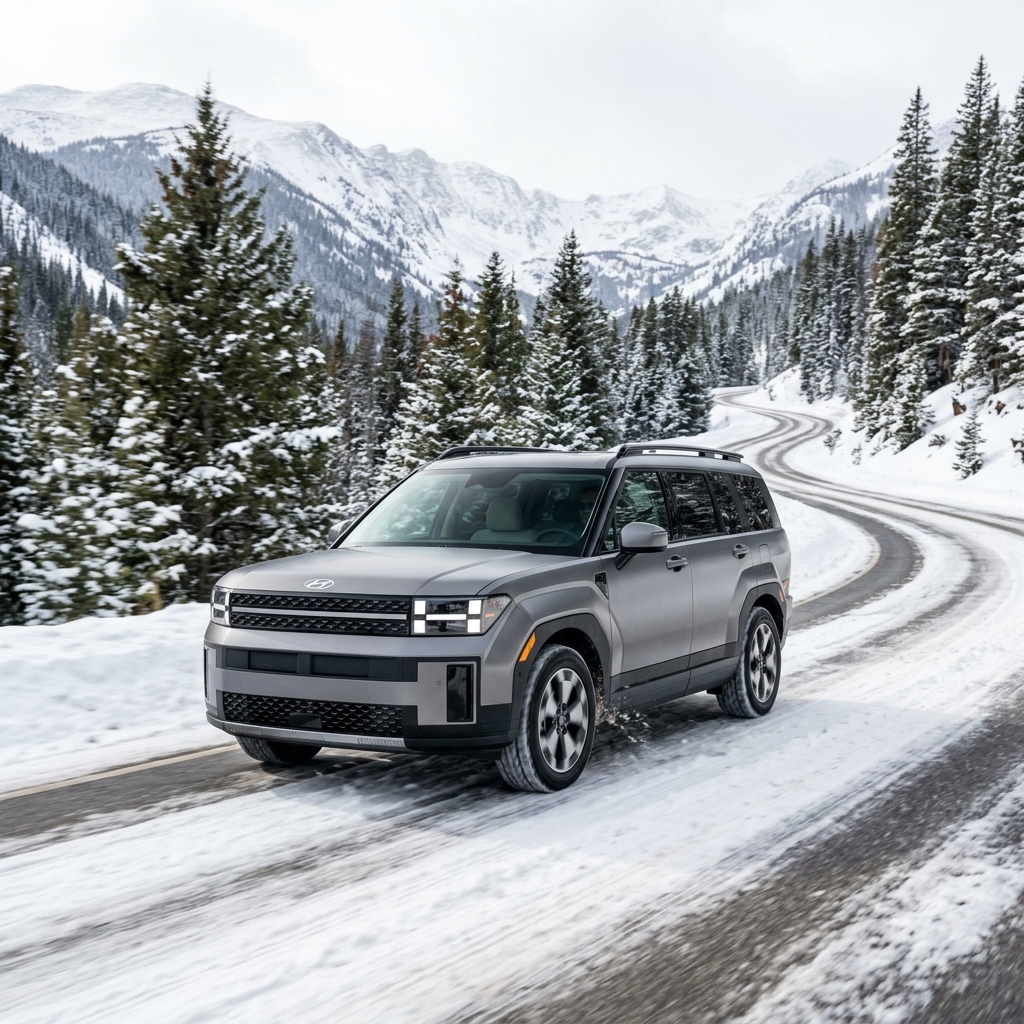
Silver Hyundai Santa Fe SUV driving on a winding, snowy mountain road lined with snow-covered pine trees. (Representative image for illustration purposes only. Actual vehicle may vary based on trim and configuration.)

What Tire Sizes and Wheel Specs Fit the 2027 Hyundai Santa Fe Trims?

The 2027 Hyundai Santa Fe arrives in several distinct trim levels, each outfitted with unique original equipment manufacturer (OEM) wheel and tire combinations. Understanding these factory dimensions is crucial when choosing a dedicated winter setup that maintains speedmeter accuracy, suspension clearance, and braking dynamics. • SE & SEL: Factory 18-inch alloy wheels fitted with 235/60R18 tires. • XRT: Rugged off-road trim featuring 18-inch dark alloy wheels with 245/60R18 all-terrain rubber and enhanced ground clearance. • Limited: Premium 20-inch alloy wheels clad in 255/45R20 low-profile tires. • Calligraphy: Flagship 21-inch wheels wrapped in 255/40R21 ultra-low-profile tires. While 20-inch and 21-inch wheels deliver striking curb appeal during summer cruises along Nevada Avenue, low-profile tires are particularly vulnerable to extreme winter damage. The short sidewall offers minimal cushioning against sharp rim-cracking potholes, and wide tread profiles tend to float on top of slush rather than biting into deep snowpack.
The Engineering Case for Winter Downsizing: Downsizing to an 18-inch winter wheel package (18x7.5J, 5x114.3 bolt pattern, +45mm offset) is the preferred strategy for Front Range drivers. A 235/60R18 winter tire matches the exact overall rolling circumference of the 21-inch Calligraphy setup, keeping your electronic speedometer, odometer, and HTRAC control computer perfectly calibrated. By increasing sidewall height from 40% to 60% of tire width, you gain over an inch of protective rubber buffer. This added sidewall flex absorbs harsh impacts from hidden road hazards, protects expensive alloy rims, and allows the tire carcass to conform to uneven icy surfaces for maximum mechanical grip.

Trim Level

Factory Wheel

OEM Tire Size

Rec. Winter Fitment

SE / SEL

18-inch

235/60R18

235/60R18

XRT

18-inch

245/60R18

235/60R18 or 245/60R18

Limited

20-inch

255/45R20

235/60R18 (Minus-2)

Calligraphy

21-inch

255/40R21

235/60R18 (Minus-3)

Which Winter Tires Perform Best for Colorado Springs Mountain Drivers?

Bridgestone Blizzak DM-V2

The Ice & Snow Heavyweight: The Blizzak DM-V2 is engineered specifically for CUVs and SUVs. Its proprietary NanoPro-Tech Multicell compound contains microscopic hydrophilic pores that act like tiny sponges, sucking away the thin film of water created by tire friction on sheet ice. • Best For: Drivers who frequently face thick ice, packed snow, and unplowed backroads in Teller and Park Counties. • Key Benefit: Unrivaled stopping power on sheer ice switchbacks near Pikes Peak. • Tread Wear: Softer compound requires prompt removal when temperatures consistently exceed 45°F.

Michelin X-Ice Snow SUV

Long-Lasting Highway Refinement: Utilizing Michelin's Flex-Ice 2.0 compound and full-depth 3D siping, the X-Ice Snow SUV offers exceptional structural rigidity under heavy loads without sacrificing low-temperature flexibility. • Best For: Commuters driving daily between Colorado Springs and Denver on I-25 who demand low rolling resistance and quiet operation. • Key Benefit: Industry-leading tread life—lasts up to one winter season longer than traditional winter competitors. • Performance: Excellent dry highway high-altitude endurance paired with 3PMSF severe snow rating.

Nokian Hakkapeliitta R5 SUV

Arctic Extreme Precision: Designed in Finland's legendary winter testing grounds, the Hakkapeliitta R5 SUV features Arctic Grip Crystals embedded throughout the tread compound, providing continuous traction as the tire wears down. • Best For: Alpine enthusiasts traveling standard weekend routes over Monarch Pass or through the Eisenhower Tunnel. • Key Benefit: Aramid-reinforced sidewalls resist sharp rocks and pothole impacts on mountain shoulders. • Efficiency: Eco-friendly low rolling resistance aids hybrid efficiency.

Studded vs. Studless Tires on Pikes Peak and Front Range Mountain Passes: Which Is Better?
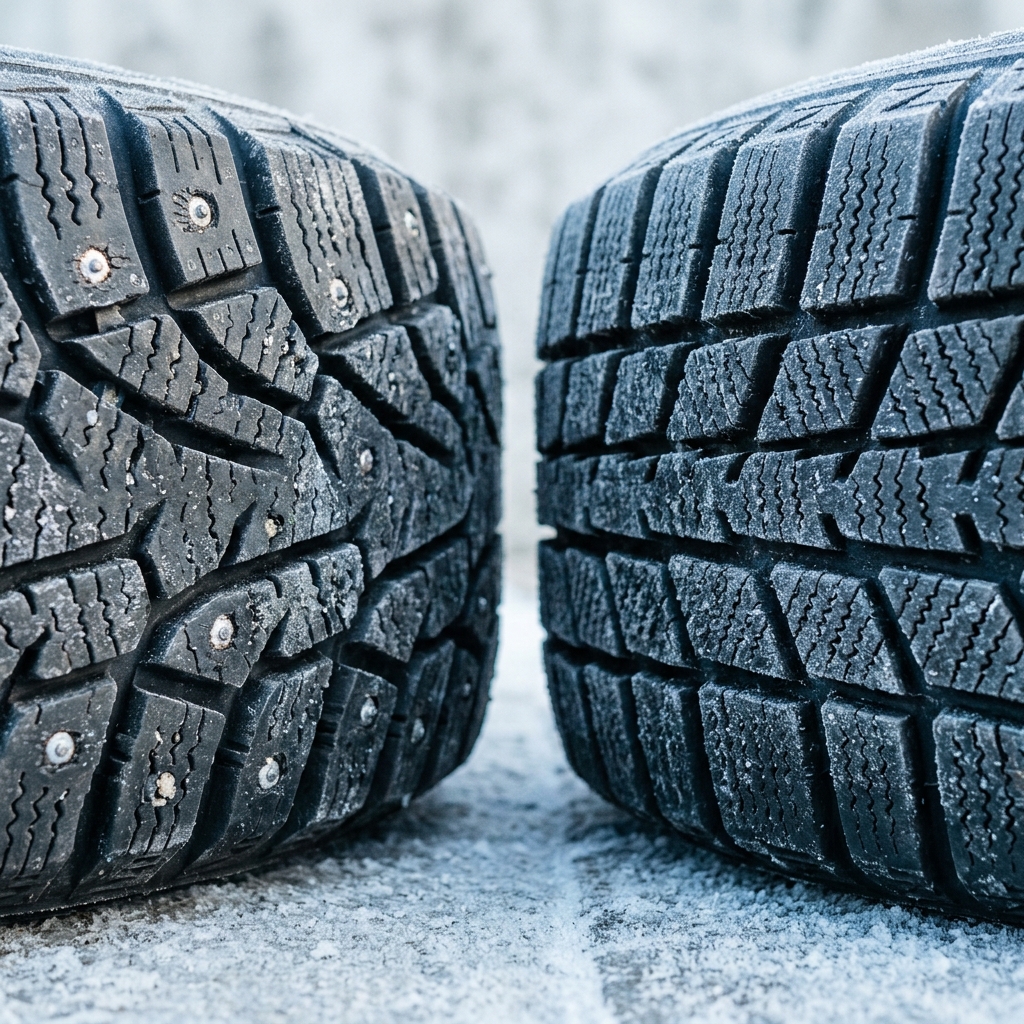
When preparing your 2027 Santa Fe for high-altitude winter traverses, deciding between studded and advanced studless tires depends heavily on your primary driving routes. While metal studs were once the gold standard for mountain driving, modern multicell rubber technology has dramatically altered the equation. Colorado CDOT Traction Law (Code 15 & Code 16) Compliance: Under Colorado Department of Transportation (CDOT) Code 15 Traction Law regulations, all passenger vehicles driving state highways (including I-70, US-24, and Hwy 115) during winter restrictions must maintain either AWD/4WD with a minimum 3/16-inch tread depth or carry dedicated winter tires marked with the 3PMSF symbol. Both studded and premium studless tires satisfy this law completely. Studded Tires: Specialized Ice Anchors Metal-studded tires excel in very specific conditions: solid glare ice and hard-packed snow at temperatures near freezing (28°F to 32°F) where a water layer lubricates the ice. However, metal studs clawing into bare dry pavement on I-25 produce pronounced road noise, increase stopping distances on clear asphalt, and degrade highway surfaces. Colorado allows studded tires year-round, but dry highway driving quickly flattens or dislodges studs.
Studless Winter Tires: The Ideal Front Range Hybrid Solution For 95% of Front Range drivers living in Colorado Springs, Security-Widefield, or Cimarron Hills, modern studless tires (like the Blizzak DM-V2 or Michelin X-Ice Snow) are superior. They provide identical braking performance on sub-zero packed snow and ice without sacrificing ride comfort, cabin acoustics, or dry-pavement high-speed stability on sunny 50°F winter afternoons. Need expert advice on mounting winter tires to your Santa Fe? Schedule Service Appointment Now with the factory-certified tire experts at #1 Phil Long Hyundai of Motor City.
Side-by-side comparison of a studded winter tire and a studless friction tire on a snowy surface. (Representative image for illustration purposes only. Actual vehicle may vary based on trim and configuration.)

What Engine and Transmission Combinations Are Offered in the 2027 Hyundai Santa Fe?

2.5L Turbo GDI Gas Engine

The standard powertrain across non-hybrid Santa Fe trims is a potent 2.5-liter Inline 4-cylinder Turbocharged GDI engine paired with a crisp 8-speed Dual-Clutch Transmission (DCT). • Horsepower: 277 hp @ 5,800 RPM • Torque: 311 lb-ft @ 1,700 - 4,000 RPM • Towing Capacity: Up to 3,500 lbs (4,500 lbs on XRT trim with factory tow package) • Mountain Characteristics: Exceptional low-end torque plateau beginning at just 1,700 RPM allows effortless passing power when climbing steep highway grades under heavy loads.

1.6L Turbo Hybrid Powertrain

For eco-conscious drivers seeking exceptional efficiency without giving up mountain climbing punch, the Santa Fe Hybrid combines a 1.6-liter Turbo GDI engine with a 44.2 kW electric motor and a traditional 6-speed automatic transmission. • Combined Output: 231 hp / 271 lb-ft of systemic torque • Electric Assist: Instant 195 lb-ft torque fill off the line from the electric motor • Mountain Characteristics: Forced-induction turbocharging combined with instant electric torque eliminates high-altitude lag, maintaining smooth acceleration up 11,000-foot passes.
Physics of High-Altitude Performance in Colorado: Naturally aspirated engines lose roughly 3% to 3.5% of their horsepower for every 1,000 feet of elevation gain due to thinner atmospheric oxygen density. At the summit of Monarch Pass (11,312 feet), a traditional engine loses nearly 38% of its rated power. However, both 2027 Hyundai Santa Fe powertrains utilize forced-induction turbochargers. The wastegate adjusts electronically to pack dense compressed air into the combustion chambers, effectively recovering lost pressure and ensuring crisp throttle response regardless of altitude.

How Effective Is Hyundai HTRAC All-Wheel Drive for Front Range Snow and Icy Passes?

Hyundai's proprietary HTRAC All-Wheel Drive system is far more advanced than traditional slip-and-grip mechanical setups. It operates as an active, multi-mode electro-hydraulic clutch system that continuously monitors vehicle speed, wheel slip sensors, steering angle, and ambient temperature to proactively shift power before loss of traction occurs. Under normal dry driving conditions on highway speedways, HTRAC routes up to 100% of torque to the front wheels to optimize fuel economy. The instant sensors detect slip or aggressive driver throttle inputs, the electro-hydraulic coupling clamps shut within milliseconds, routing up to 50% of engine torque to the rear axle. Dedicated Snow Mode Calibration: Selecting Snow Mode via the drive mode dial on the center console alters several critical control units simultaneously: 1. Torque Distribution: Locks in a proactive split (often starting at 50:50) to prevent initial wheelspin when starting on slick gradients. 2. Throttle Mapping: Softens accelerator sensitivity so driver inputs don't inadvertently break tire traction on sheer ice. 3. Transmission Logic: Instructs the 8-speed DCT or 6-speed Automatic to launch in second gear and shift earlier to keep engine RPMs in a manageable torque band. 4. Downhill Brake Control (DBC): Engages automated ABS pulses during steep declines, allowing controlled descending without locked-up sliding.
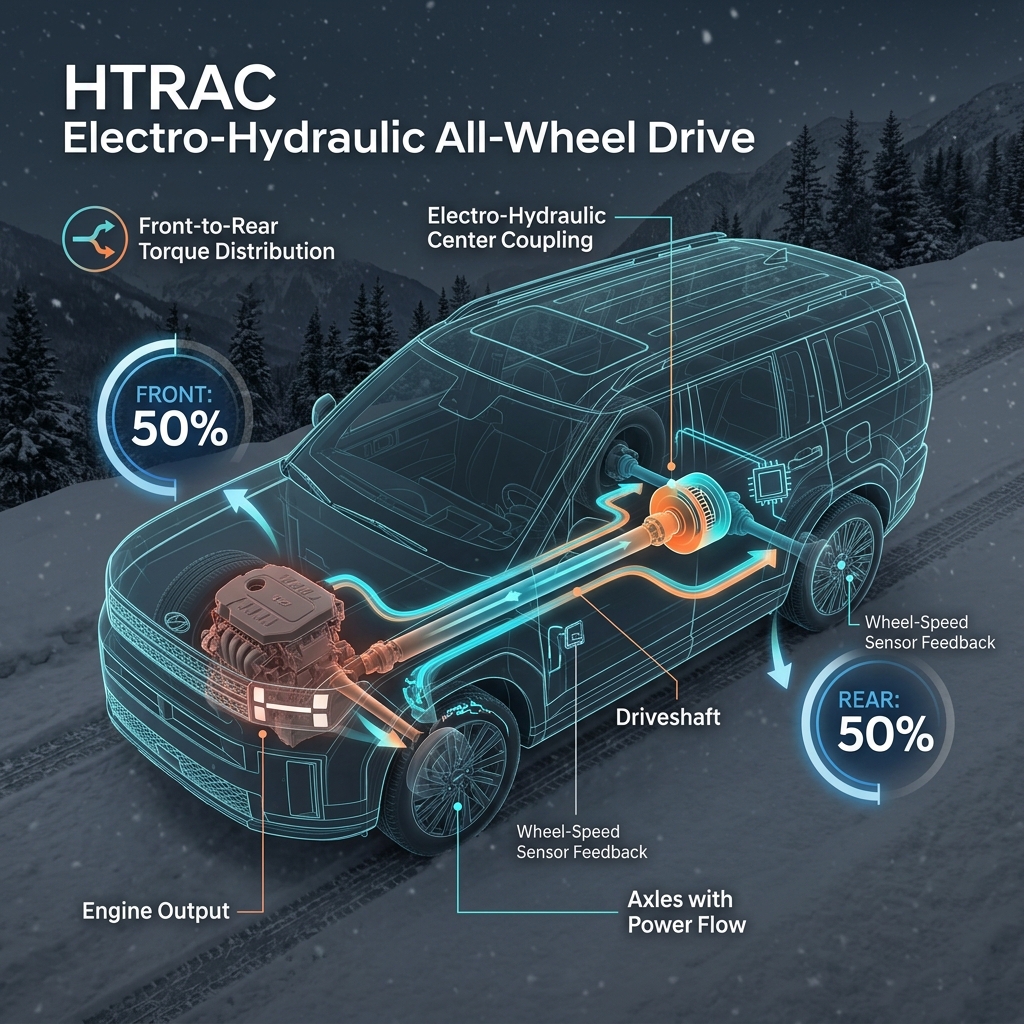
Technical diagram illustrating HTRAC Electro-Hydraulic All-Wheel Drive power distribution in an SUV driving on snow. (Representative image for illustration purposes only. Actual vehicle may vary based on trim and configuration.)

2027 Hyundai Santa Fe Gas vs. Hybrid: Finding the Right SUV for Front Range Mountain Trips

A common concern among Colorado drivers is whether mountain inclines drain hybrid batteries and ruin overall efficiency. The reality in the 2027 Santa Fe Hybrid is quite the opposite, thanks to high-altitude gravitational dynamics and sophisticated thermal management. Regenerative Braking on Long Mountain Descents: When ascending a steep 6% grade up Ute Pass or Wilkerson Pass, the 1.6L Turbo engine works in tandem with the electric motor, consuming gas and battery power. However, the return descent down the mountain reverses this energy flow completely. Through Smart Regenerative Braking, the electric motor converts kinetic downhill momentum back into chemical energy stored in the 1.49 kWh lithium-ion polymer battery. By the time you reach the base of the mountain, your battery is fully replenished—all while saving your mechanical brakes from severe overheating. Sub-Zero Battery Management: Freezing winter temperatures can degrade battery efficiency in traditional EVs, but the Santa Fe Hybrid incorporates an active liquid thermal management loop and exhaust heat recovery system to rapidly warm battery cells to ideal operating temperatures.
Comparing Real-World Mountain Trim Strengths:• Choose the 2.5T Gas Model if: You regularly tow heavy trailers or campers (up to 4,500 lbs on XRT), prefer aggressive off-road rock scrambling, or want maximum total horsepower (277 hp) for fast high-speed mountain highway cruising. • Choose the 1.6T Hybrid Model if: You prioritize low fuel expense during high-mileage Front Range daily commutes, value whisper-quiet urban electric driving, and want to minimize brake pad wear through mountain downhill regeneration. Thinking about upgrading your current vehicle? Value Your Trade OR Sell Us Your Car today using our instant online appraisal tool.

How Many Miles Does It Take to Recoup the Hybrid Price Premium in Gas Savings?

1. Upfront Price Premium

The standard purchase price differential between an equivalent Santa Fe gas trim and a Santa Fe Hybrid is typically around $1,800 to $2,200. Considering standard regional fuel prices in El Paso County, this small initial premium translates into rapid payback.

2. Fuel Economy Math

• 2.5T AWD Gas:~23 MPG combined • 1.6T AWD Hybrid:~35 MPG combined At 15,000 annual driving miles and $3.50/gallon, the gas model uses ~652 gallons ($2,282/yr), while the hybrid consumes only ~428 gallons ($1,498/yr)—a direct savings of $784 per year.

3. Financial Payback

Dividing the ~$2,000 price gap by the annual $784 fuel savings yields a financial payback timeline of just 2.55 years or approximately 38,000 miles. Beyond that threshold, every mile puts money right back in your pocket.

Driving Metric

2.5T Gas AWD

1.6T Hybrid AWD

Hybrid Advantage

Combined Fuel Economy

23 MPG

35 MPG

+12 MPG (+52%)

Annual Gas Cost (15k mi)

$2,282

$1,498

Save $784/yr

Brake Replacement Cycle

Every 35,000 mi

Every 70,000+ mi

Saves ~$600 in maintenance

Payback Timeline

Baseline

2.5 Years / 38,000 Mi

Pure Profit Thereafter

How Does the 2027 Hyundai Santa Fe Compare to the Kia Sorento for Front Range Drivers?

While the 2027 Hyundai Santa Fe and Kia Sorento share underlying platform architecture, significant engineering and ergonomic differences separate them when battling harsh Colorado winter weather. 1. Wheel Well Clearance & Snow Build-up: The radically redesigned boxy silhouette of the 2027 Santa Fe features wide, squared-off wheel arches with robust high-density composite wheel arch cladding. This provides significantly greater vertical clearance than the Sorento's tighter curved arches, allowing packed snow and slush to drop free rather than freezing into rock-hard ice blocks that rub against tires during sharp turns. 2. Cargo Capability for Ski Gear: The Santa Fe boasts a cavernous 40.5 cu. ft. of cargo volume behind the second row (80 cu. ft. overall with rear seats stowed), dwarfing the Sorento. Its extra-wide rear tailgate opening makes loading long ski bags, snowboards, and cold-weather gear effortless.
3. Gloved-Hand Ergonomics: In winter, small interior details make a massive difference. The Santa Fe interior incorporates physical climate knobs and tactile drive-mode switches on the center stack. Unlike the Sorento's touch-capacitive dual-purpose control bar, Santa Fe drivers can easily adjust cabin heating, turn on heated seats, or engage Snow Mode without removing bulky winter gloves. 4. Standard Winter Safety Systems: Every 2027 Santa Fe comes standard with Hyundai SmartSense safety tech, including Forward Collision-Avoidance Assist with junction turning detection and Blind-Spot Collision-Avoidance. Furthermore, buyers at #1 Phil Long Hyundai of Motor City benefit from our exclusive 30-year / 300,000-mile Powertrain Warranty Promise.

How Does the Santa Fe Hybrid Perform Compared to the Toyota Highlander Hybrid?
When comparing midsize three-row hybrid SUVs for mountain capability, the mechanical execution of the drive system is paramount. The Toyota Highlander Hybrid utilizes an electronically controlled Continuously Variable Transmission (eCVT) and an Electronic On-Demand AWD system (an independent rear electric motor with no physical driveshaft). Stepped 6-Speed Automatic vs. eCVT Rubber-Band Effect: When ascending steep mountain grades, Toyota's eCVT holds the gas engine at high, screaming RPMs to maintain speed, creating unpleasant cabin drone. In contrast, the 2027 Santa Fe Hybrid utilizes a true 6-speed stepped automatic transmission. Shift points feel natural, engine revs remain composed, and paddle shifters allow drivers to manually downshift for engine braking on steep declines. Mechanical HTRAC AWD vs. e-AWD Rear Motor: The Highlander's rear electric motor is limited in power output and will disengage or thermal-throttle under sustained heavy loads in deep snow. The Santa Fe Hybrid relies on a heavy-duty mechanical driveshaft coupled with electro-hydraulic multi-plate clutches, delivering continuous, unyielding mechanical torque to the rear wheels indefinitely.
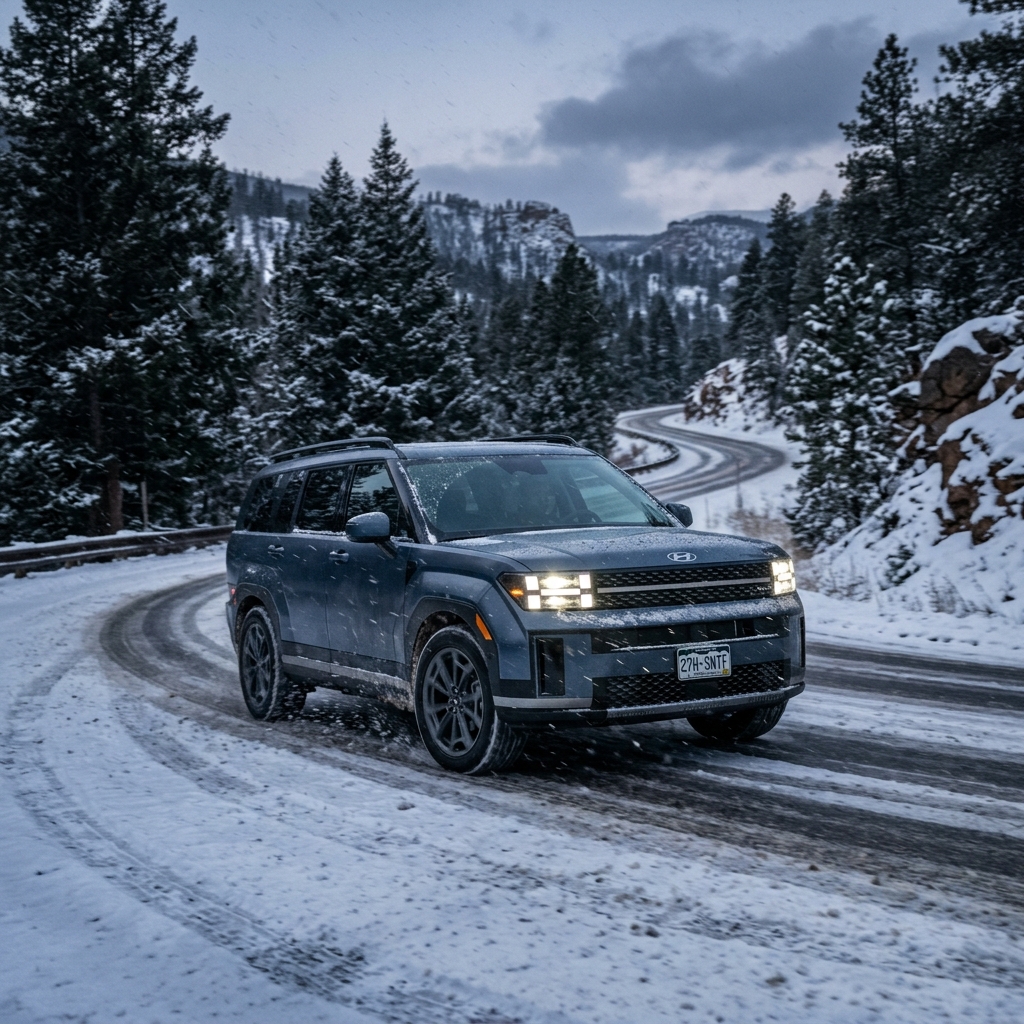
A blue Hyundai Santa Fe SUV driving along a winding, snow-covered mountain road surrounded by pine trees. (Representative image for illustration purposes only. Actual vehicle may vary based on trim and configuration.)
Ready to finance your new 2027 Hyundai Santa Fe? Apply For Financing online today with our finance center at #1 Phil Long Hyundai of Motor City. We specialize in competitive rates and flexible payment options.

Winter Tire Maintenance, TPMS Calibration, and Seasonal Storage Tips

Cold Temperature PSI

The 1 PSI per 10°F Rule: For every 10°F drop in ambient temperature, tire pressure decreases by approximately 1 PSI. A tire set correctly at 35 PSI during a warm 60°F fall afternoon will drop to 29 PSI during a 0°F winter morning. Check cold pressures monthly using a quality gauge, or inflate with dry nitrogen gas to stabilize pressure fluctuations.

TPMS & Tread Depth

Tire Pressure Calibration: When switching to an 18-inch winter wheel package with new TPMS sensors, recalibrate the system via the gauge cluster settings. Monitor tread depth carefully: while 2/32" is the legal minimum, winter tires lose their winter gripping effectiveness once worn past 5/32" (4mm) depth.

Off-Season Storage

Preserving Rubber Compounds: Store off-season tires in airtight dark plastic bags inside a climate-controlled space. Keep tires away from electric motors or furnaces that generate ozone, which breaks down rubber polymers. Wash away corrosive road salts and mag-chloride chemicals thoroughly prior to storage.

Equipping Your 2027 Hyundai Santa Fe for Mountain Winter Driving in Colorado Springs

Outfitting your 2027 Hyundai Santa Fe with an 18-inch dedicated winter tire package—such as the Bridgestone Blizzak DM-V2, Michelin X-Ice Snow SUV, or Nokian Hakkapeliitta R5 SUV—gives you maximum confidence when navigating Colorado’s challenging alpine terrain. Combined with the intelligence of Hyundai HTRAC AWD and turbocharged engine performance, your Santa Fe is ready for winter family ski trips and daily Front Range commutes alike. At #1 Phil Long Hyundai of Motor City, we are proud to serve drivers throughout Colorado Springs, Fountain, Castle Rock, and Pueblo. Whether you are looking to purchase a new HTRAC-equipped Santa Fe, order custom winter wheel packages, or take advantage of our exclusive 30-year / 300,000-mile Powertrain Warranty, our team is ready to assist. Visit us today at 170 W Motor Way, Colorado Springs, CO 80905 or Call us at (719) 453-0549 to speak with an expert consultant. Learn more about our maintenance plans and vehicle protection by checking our Service Center Information.
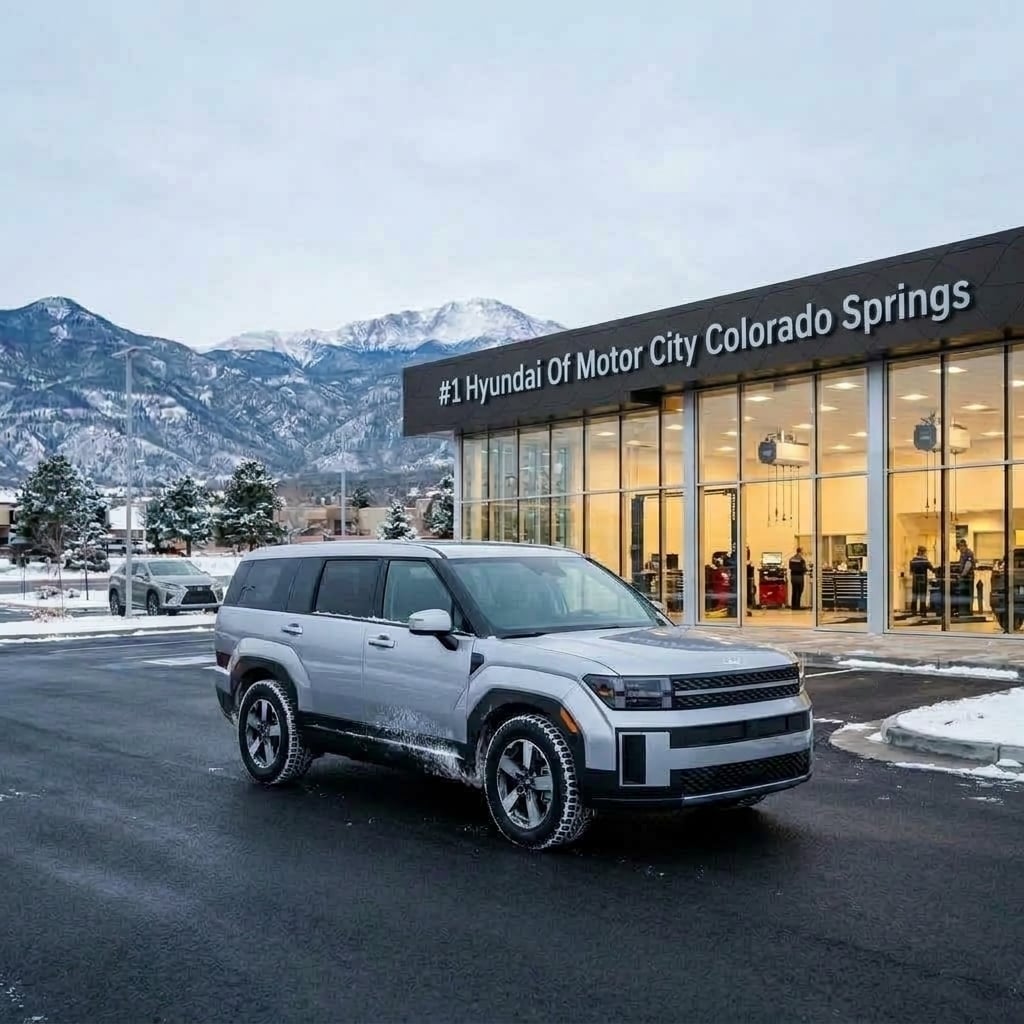
A commercial photograph of a 2027 Hyundai Santa Fe SUV parked in a three-quarter front view outside a sleek, modern automotive service center and dealership in Colorado Springs during winter. The boxy, angular body of the SUV is highlighted by subtle snow dust along its lower body panels, equipped with rugged 18-inch winter tires boasting deep snow tread. In the background, clean glass windows of the service building reflect cold ambient light, while snow-dusted pine trees and the grand silhouette of Pikes Peak rise under an overcast, soft-lit winter sky. The wide eye-level shot captures a clean, professional automotive marketing aesthetic with crisp details, cool grey and navy tones, and no visible logos, license plates, or readable text. (Representative image for illustration purposes only. Actual vehicle may vary based on trim and configuration.)
 

Best Winter Tires for the 2027 Hyundai Santa Fe on Mountain Roads: Top Sizing & Tread Picks

Conquering winter in the Colorado Front Range demands more than standard all-season rubber—it requires precise tire engineering tailored to the sophisticated drivetrain of the 2027 Hyundai Santa Fe. If you are navigating freeze-thaw cycles along I-25, tackling sudden blizzard conditions on Monument Hill, or steering through treacherous switchbacks up Ute Pass toward Woodland Park, selecting the right dedicated snow tire is the single most critical safety decision you will make this season. For optimal mountain driving performance, the industry-leading winter tire fitments for the 2027 Hyundai Santa Fe are the Bridgestone Blizzak DM-V2, the Michelin X-Ice Snow SUV, and the Nokian Hakkapeliitta R5 SUV. While factory trims range from 18-inch wheels on the SE to massive 21-inch alloys on the Calligraphy, tire engineers and mountain driving experts strongly advise downsizing to an 18-inch winter wheel package (specifically 235/60R18 or 245/55R19). Sizing down provides a taller, more flexible sidewall that absorbs rim-bending potholes hidden under fresh pack-snow, while narrowing the tread width allows the tire to knife through deep slush rather than hydroplaning over it. When paired with Hyundai’s advanced HTRAC All-Wheel Drive system, a proper Three-Peak Mountain Snowflake (3PMSF) certified tire transforms the Santa Fe into an unshakeable winter fortress. At #1 Phil Long Hyundai of Motor City, our factory-trained technicians help El Paso County drivers select, balance, and install tire packages engineered to withstand high-altitude sub-zero climates. Explore our New Car Inventory Search today to see HTRAC-equipped Santa Fe models ready for Colorado winter adventures.
Silver Hyundai Santa Fe SUV driving on a winding, snowy mountain road lined with snow-covered pine trees. (Representative image for illustration purposes only. Actual vehicle may vary based on trim and configuration.)

What Tire Sizes and Wheel Specs Fit the 2027 Hyundai Santa Fe Trims?

The 2027 Hyundai Santa Fe arrives in several distinct trim levels, each outfitted with unique original equipment manufacturer (OEM) wheel and tire combinations. Understanding these factory dimensions is crucial when choosing a dedicated winter setup that maintains speedmeter accuracy, suspension clearance, and braking dynamics. • SE & SEL: Factory 18-inch alloy wheels fitted with 235/60R18 tires. • XRT: Rugged off-road trim featuring 18-inch dark alloy wheels with 245/60R18 all-terrain rubber and enhanced ground clearance. • Limited: Premium 20-inch alloy wheels clad in 255/45R20 low-profile tires. • Calligraphy: Flagship 21-inch wheels wrapped in 255/40R21 ultra-low-profile tires. While 20-inch and 21-inch wheels deliver striking curb appeal during summer cruises along Nevada Avenue, low-profile tires are particularly vulnerable to extreme winter damage. The short sidewall offers minimal cushioning against sharp rim-cracking potholes, and wide tread profiles tend to float on top of slush rather than biting into deep snowpack.
The Engineering Case for Winter Downsizing: Downsizing to an 18-inch winter wheel package (18x7.5J, 5x114.3 bolt pattern, +45mm offset) is the preferred strategy for Front Range drivers. A 235/60R18 winter tire matches the exact overall rolling circumference of the 21-inch Calligraphy setup, keeping your electronic speedometer, odometer, and HTRAC control computer perfectly calibrated. By increasing sidewall height from 40% to 60% of tire width, you gain over an inch of protective rubber buffer. This added sidewall flex absorbs harsh impacts from hidden road hazards, protects expensive alloy rims, and allows the tire carcass to conform to uneven icy surfaces for maximum mechanical grip.

Trim Level

Factory Wheel

OEM Tire Size

Rec. Winter Fitment

SE / SEL

18-inch

235/60R18

235/60R18

XRT

18-inch

245/60R18

235/60R18 or 245/60R18

Limited

20-inch

255/45R20

235/60R18 (Minus-2)

Calligraphy

21-inch

255/40R21

235/60R18 (Minus-3)

Which Winter Tires Perform Best for Colorado Springs Mountain Drivers?

Bridgestone Blizzak DM-V2

The Ice & Snow Heavyweight: The Blizzak DM-V2 is engineered specifically for CUVs and SUVs. Its proprietary NanoPro-Tech Multicell compound contains microscopic hydrophilic pores that act like tiny sponges, sucking away the thin film of water created by tire friction on sheet ice. • Best For: Drivers who frequently face thick ice, packed snow, and unplowed backroads in Teller and Park Counties. • Key Benefit: Unrivaled stopping power on sheer ice switchbacks near Pikes Peak. • Tread Wear: Softer compound requires prompt removal when temperatures consistently exceed 45°F.

Michelin X-Ice Snow SUV

Long-Lasting Highway Refinement: Utilizing Michelin's Flex-Ice 2.0 compound and full-depth 3D siping, the X-Ice Snow SUV offers exceptional structural rigidity under heavy loads without sacrificing low-temperature flexibility. • Best For: Commuters driving daily between Colorado Springs and Denver on I-25 who demand low rolling resistance and quiet operation. • Key Benefit: Industry-leading tread life—lasts up to one winter season longer than traditional winter competitors. • Performance: Excellent dry highway high-altitude endurance paired with 3PMSF severe snow rating.

Nokian Hakkapeliitta R5 SUV

Arctic Extreme Precision: Designed in Finland's legendary winter testing grounds, the Hakkapeliitta R5 SUV features Arctic Grip Crystals embedded throughout the tread compound, providing continuous traction as the tire wears down. • Best For: Alpine enthusiasts traveling standard weekend routes over Monarch Pass or through the Eisenhower Tunnel. • Key Benefit: Aramid-reinforced sidewalls resist sharp rocks and pothole impacts on mountain shoulders. • Efficiency: Eco-friendly low rolling resistance aids hybrid efficiency.

Studded vs. Studless Tires on Pikes Peak and Front Range Mountain Passes: Which Is Better?

When preparing your 2027 Santa Fe for high-altitude winter traverses, deciding between studded and advanced studless tires depends heavily on your primary driving routes. While metal studs were once the gold standard for mountain driving, modern multicell rubber technology has dramatically altered the equation. Colorado CDOT Traction Law (Code 15 & Code 16) Compliance: Under Colorado Department of Transportation (CDOT) Code 15 Traction Law regulations, all passenger vehicles driving state highways (including I-70, US-24, and Hwy 115) during winter restrictions must maintain either AWD/4WD with a minimum 3/16-inch tread depth or carry dedicated winter tires marked with the 3PMSF symbol. Both studded and premium studless tires satisfy this law completely. Studded Tires: Specialized Ice Anchors Metal-studded tires excel in very specific conditions: solid glare ice and hard-packed snow at temperatures near freezing (28°F to 32°F) where a water layer lubricates the ice. However, metal studs clawing into bare dry pavement on I-25 produce pronounced road noise, increase stopping distances on clear asphalt, and degrade highway surfaces. Colorado allows studded tires year-round, but dry highway driving quickly flattens or dislodges studs.
Studless Winter Tires: The Ideal Front Range Hybrid Solution For 95% of Front Range drivers living in Colorado Springs, Security-Widefield, or Cimarron Hills, modern studless tires (like the Blizzak DM-V2 or Michelin X-Ice Snow) are superior. They provide identical braking performance on sub-zero packed snow and ice without sacrificing ride comfort, cabin acoustics, or dry-pavement high-speed stability on sunny 50°F winter afternoons. Need expert advice on mounting winter tires to your Santa Fe? Schedule Service Appointment Now with the factory-certified tire experts at #1 Phil Long Hyundai of Motor City.
Side-by-side comparison of a studded winter tire and a studless friction tire on a snowy surface. (Representative image for illustration purposes only. Actual vehicle may vary based on trim and configuration.)

What Engine and Transmission Combinations Are Offered in the 2027 Hyundai Santa Fe?

2.5L Turbo GDI Gas Engine

The standard powertrain across non-hybrid Santa Fe trims is a potent 2.5-liter Inline 4-cylinder Turbocharged GDI engine paired with a crisp 8-speed Dual-Clutch Transmission (DCT). • Horsepower: 277 hp @ 5,800 RPM • Torque: 311 lb-ft @ 1,700 - 4,000 RPM • Towing Capacity: Up to 3,500 lbs (4,500 lbs on XRT trim with factory tow package) • Mountain Characteristics: Exceptional low-end torque plateau beginning at just 1,700 RPM allows effortless passing power when climbing steep highway grades under heavy loads.

1.6L Turbo Hybrid Powertrain

For eco-conscious drivers seeking exceptional efficiency without giving up mountain climbing punch, the Santa Fe Hybrid combines a 1.6-liter Turbo GDI engine with a 44.2 kW electric motor and a traditional 6-speed automatic transmission. • Combined Output: 231 hp / 271 lb-ft of systemic torque • Electric Assist: Instant 195 lb-ft torque fill off the line from the electric motor • Mountain Characteristics: Forced-induction turbocharging combined with instant electric torque eliminates high-altitude lag, maintaining smooth acceleration up 11,000-foot passes.
Physics of High-Altitude Performance in Colorado: Naturally aspirated engines lose roughly 3% to 3.5% of their horsepower for every 1,000 feet of elevation gain due to thinner atmospheric oxygen density. At the summit of Monarch Pass (11,312 feet), a traditional engine loses nearly 38% of its rated power. However, both 2027 Hyundai Santa Fe powertrains utilize forced-induction turbochargers. The wastegate adjusts electronically to pack dense compressed air into the combustion chambers, effectively recovering lost pressure and ensuring crisp throttle response regardless of altitude.

How Effective Is Hyundai HTRAC All-Wheel Drive for Front Range Snow and Icy Passes?

Hyundai's proprietary HTRAC All-Wheel Drive system is far more advanced than traditional slip-and-grip mechanical setups. It operates as an active, multi-mode electro-hydraulic clutch system that continuously monitors vehicle speed, wheel slip sensors, steering angle, and ambient temperature to proactively shift power before loss of traction occurs. Under normal dry driving conditions on highway speedways, HTRAC routes up to 100% of torque to the front wheels to optimize fuel economy. The instant sensors detect slip or aggressive driver throttle inputs, the electro-hydraulic coupling clamps shut within milliseconds, routing up to 50% of engine torque to the rear axle. Dedicated Snow Mode Calibration: Selecting Snow Mode via the drive mode dial on the center console alters several critical control units simultaneously: 1. Torque Distribution: Locks in a proactive split (often starting at 50:50) to prevent initial wheelspin when starting on slick gradients. 2. Throttle Mapping: Softens accelerator sensitivity so driver inputs don't inadvertently break tire traction on sheer ice. 3. Transmission Logic: Instructs the 8-speed DCT or 6-speed Automatic to launch in second gear and shift earlier to keep engine RPMs in a manageable torque band. 4. Downhill Brake Control (DBC): Engages automated ABS pulses during steep declines, allowing controlled descending without locked-up sliding.
Technical diagram illustrating HTRAC Electro-Hydraulic All-Wheel Drive power distribution in an SUV driving on snow. (Representative image for illustration purposes only. Actual vehicle may vary based on trim and configuration.)

2027 Hyundai Santa Fe Gas vs. Hybrid: Finding the Right SUV for Front Range Mountain Trips

A common concern among Colorado drivers is whether mountain inclines drain hybrid batteries and ruin overall efficiency. The reality in the 2027 Santa Fe Hybrid is quite the opposite, thanks to high-altitude gravitational dynamics and sophisticated thermal management. Regenerative Braking on Long Mountain Descents: When ascending a steep 6% grade up Ute Pass or Wilkerson Pass, the 1.6L Turbo engine works in tandem with the electric motor, consuming gas and battery power. However, the return descent down the mountain reverses this energy flow completely. Through Smart Regenerative Braking, the electric motor converts kinetic downhill momentum back into chemical energy stored in the 1.49 kWh lithium-ion polymer battery. By the time you reach the base of the mountain, your battery is fully replenished—all while saving your mechanical brakes from severe overheating. Sub-Zero Battery Management: Freezing winter temperatures can degrade battery efficiency in traditional EVs, but the Santa Fe Hybrid incorporates an active liquid thermal management loop and exhaust heat recovery system to rapidly warm battery cells to ideal operating temperatures.
Comparing Real-World Mountain Trim Strengths:• Choose the 2.5T Gas Model if: You regularly tow heavy trailers or campers (up to 4,500 lbs on XRT), prefer aggressive off-road rock scrambling, or want maximum total horsepower (277 hp) for fast high-speed mountain highway cruising. • Choose the 1.6T Hybrid Model if: You prioritize low fuel expense during high-mileage Front Range daily commutes, value whisper-quiet urban electric driving, and want to minimize brake pad wear through mountain downhill regeneration. Thinking about upgrading your current vehicle? Value Your Trade OR Sell Us Your Car today using our instant online appraisal tool.

How Many Miles Does It Take to Recoup the Hybrid Price Premium in Gas Savings?

1. Upfront Price Premium

The standard purchase price differential between an equivalent Santa Fe gas trim and a Santa Fe Hybrid is typically around $1,800 to $2,200. Considering standard regional fuel prices in El Paso County, this small initial premium translates into rapid payback.

2. Fuel Economy Math

• 2.5T AWD Gas:~23 MPG combined • 1.6T AWD Hybrid:~35 MPG combined At 15,000 annual driving miles and $3.50/gallon, the gas model uses ~652 gallons ($2,282/yr), while the hybrid consumes only ~428 gallons ($1,498/yr)—a direct savings of $784 per year.

3. Financial Payback

Dividing the ~$2,000 price gap by the annual $784 fuel savings yields a financial payback timeline of just 2.55 years or approximately 38,000 miles. Beyond that threshold, every mile puts money right back in your pocket.

Driving Metric

2.5T Gas AWD

1.6T Hybrid AWD

Hybrid Advantage

Combined Fuel Economy

23 MPG

35 MPG

+12 MPG (+52%)

Annual Gas Cost (15k mi)

$2,282

$1,498

Save $784/yr

Brake Replacement Cycle

Every 35,000 mi

Every 70,000+ mi

Saves ~$600 in maintenance

Payback Timeline

Baseline

2.5 Years / 38,000 Mi

Pure Profit Thereafter

How Does the 2027 Hyundai Santa Fe Compare to the Kia Sorento for Front Range Drivers?

While the 2027 Hyundai Santa Fe and Kia Sorento share underlying platform architecture, significant engineering and ergonomic differences separate them when battling harsh Colorado winter weather. 1. Wheel Well Clearance & Snow Build-up: The radically redesigned boxy silhouette of the 2027 Santa Fe features wide, squared-off wheel arches with robust high-density composite wheel arch cladding. This provides significantly greater vertical clearance than the Sorento's tighter curved arches, allowing packed snow and slush to drop free rather than freezing into rock-hard ice blocks that rub against tires during sharp turns. 2. Cargo Capability for Ski Gear: The Santa Fe boasts a cavernous 40.5 cu. ft. of cargo volume behind the second row (80 cu. ft. overall with rear seats stowed), dwarfing the Sorento. Its extra-wide rear tailgate opening makes loading long ski bags, snowboards, and cold-weather gear effortless.
3. Gloved-Hand Ergonomics: In winter, small interior details make a massive difference. The Santa Fe interior incorporates physical climate knobs and tactile drive-mode switches on the center stack. Unlike the Sorento's touch-capacitive dual-purpose control bar, Santa Fe drivers can easily adjust cabin heating, turn on heated seats, or engage Snow Mode without removing bulky winter gloves. 4. Standard Winter Safety Systems: Every 2027 Santa Fe comes standard with Hyundai SmartSense safety tech, including Forward Collision-Avoidance Assist with junction turning detection and Blind-Spot Collision-Avoidance. Furthermore, buyers at #1 Phil Long Hyundai of Motor City benefit from our exclusive 30-year / 300,000-mile Powertrain Warranty Promise.

How Does the Santa Fe Hybrid Perform Compared to the Toyota Highlander Hybrid?

When comparing midsize three-row hybrid SUVs for mountain capability, the mechanical execution of the drive system is paramount. The Toyota Highlander Hybrid utilizes an electronically controlled Continuously Variable Transmission (eCVT) and an Electronic On-Demand AWD system (an independent rear electric motor with no physical driveshaft). Stepped 6-Speed Automatic vs. eCVT Rubber-Band Effect: When ascending steep mountain grades, Toyota's eCVT holds the gas engine at high, screaming RPMs to maintain speed, creating unpleasant cabin drone. In contrast, the 2027 Santa Fe Hybrid utilizes a true 6-speed stepped automatic transmission. Shift points feel natural, engine revs remain composed, and paddle shifters allow drivers to manually downshift for engine braking on steep declines. Mechanical HTRAC AWD vs. e-AWD Rear Motor: The Highlander's rear electric motor is limited in power output and will disengage or thermal-throttle under sustained heavy loads in deep snow. The Santa Fe Hybrid relies on a heavy-duty mechanical driveshaft coupled with electro-hydraulic multi-plate clutches, delivering continuous, unyielding mechanical torque to the rear wheels indefinitely.
A blue Hyundai Santa Fe SUV driving along a winding, snow-covered mountain road surrounded by pine trees. (Representative image for illustration purposes only. Actual vehicle may vary based on trim and configuration.)
Ready to finance your new 2027 Hyundai Santa Fe? Apply For Financing online today with our finance center at #1 Phil Long Hyundai of Motor City. We specialize in competitive rates and flexible payment options.

Winter Tire Maintenance, TPMS Calibration, and Seasonal Storage Tips

Cold Temperature PSI

The 1 PSI per 10°F Rule: For every 10°F drop in ambient temperature, tire pressure decreases by approximately 1 PSI. A tire set correctly at 35 PSI during a warm 60°F fall afternoon will drop to 29 PSI during a 0°F winter morning. Check cold pressures monthly using a quality gauge, or inflate with dry nitrogen gas to stabilize pressure fluctuations.

TPMS & Tread Depth

Tire Pressure Calibration: When switching to an 18-inch winter wheel package with new TPMS sensors, recalibrate the system via the gauge cluster settings. Monitor tread depth carefully: while 2/32" is the legal minimum, winter tires lose their winter gripping effectiveness once worn past 5/32" (4mm) depth.

Off-Season Storage

Preserving Rubber Compounds: Store off-season tires in airtight dark plastic bags inside a climate-controlled space. Keep tires away from electric motors or furnaces that generate ozone, which breaks down rubber polymers. Wash away corrosive road salts and mag-chloride chemicals thoroughly prior to storage.

Equipping Your 2027 Hyundai Santa Fe for Mountain Winter Driving in Colorado Springs

Outfitting your 2027 Hyundai Santa Fe with an 18-inch dedicated winter tire package—such as the Bridgestone Blizzak DM-V2, Michelin X-Ice Snow SUV, or Nokian Hakkapeliitta R5 SUV—gives you maximum confidence when navigating Colorado’s challenging alpine terrain. Combined with the intelligence of Hyundai HTRAC AWD and turbocharged engine performance, your Santa Fe is ready for winter family ski trips and daily Front Range commutes alike. At #1 Phil Long Hyundai of Motor City, we are proud to serve drivers throughout Colorado Springs, Fountain, Castle Rock, and Pueblo. Whether you are looking to purchase a new HTRAC-equipped Santa Fe, order custom winter wheel packages, or take advantage of our exclusive 30-year / 300,000-mile Powertrain Warranty, our team is ready to assist. Visit us today at 170 W Motor Way, Colorado Springs, CO 80905 or Call us at (719) 453-0549 to speak with an expert consultant. Learn more about our maintenance plans and vehicle protection by checking our Service Center Information.
A commercial photograph of a 2027 Hyundai Santa Fe SUV parked in a three-quarter front view outside a sleek, modern automotive service center and dealership in Colorado Springs during winter. The boxy, angular body of the SUV is highlighted by subtle snow dust along its lower body panels, equipped with rugged 18-inch winter tires boasting deep snow tread. In the background, clean glass windows of the service building reflect cold ambient light, while snow-dusted pine trees and the grand silhouette of Pikes Peak rise under an overcast, soft-lit winter sky. The wide eye-level shot captures a clean, professional automotive marketing aesthetic with crisp details, cool grey and navy tones, and no visible logos, license plates, or readable text. (Representative image for illustration purposes only. Actual vehicle may vary based on trim and configuration.)